Misuse can result in serious injury and damage to the tool. Foreseeable misuse includes, for example:
Any use of the tool other than that for which it is intended or any use other than that for which it is intended.
Operating the tool in non-compliant and potentially explosive environments.
Operating the tool without the intended safety devices or with defective safety devices.
Modifying or disabling the safety devices.
Programming the machine with values out of the specified range.
Failure to observe the operating instructions.
Installing software that is not approved by the tool manufacturer.
Carrying out maintenance work on an unsecured tool.
Placing objects on work surfaces.
The installation of spare parts and the use of accessories and equipment that are not approved by the manufacturer.
Making structural changes to the tool without the consent of the tool manufacturer and subsequent risk assessment.
Failure to observe the maintenance instructions.
Failure to observe signs of wear and damage.
Service work performed by untrained or unauthorized personnel.
Deliberate, unintentional, or reckless handling of the tool during operation.
Operation of the tool in an obviously faulty condition.
The use of external energy sources that are not approved by the tool manufacturer.
Permissible Aids and Operating Materials
The following auxiliary and operating materials may be used on the tool:
Isopropanol
Latex gloves
The recommended cleaning agent is isopropanol. Isopropanol is a flammable solvent and must be used in compliance with the safety data sheet. Restrictions may apply in relation to environmental regulations concerning the total quantity of permissible solvents. Suitable precautionary measures must be taken in the storage, usage, and disposal of these chemicals, which should be treated as hazardous substances.
Ensure that repairs are carried out in a timely manner.
All work on live parts of the electrical installation must only be carried out when the tool is de-energized.
Only allow protective covers on the tool or tool parts to be opened by qualified electricians, when the tool is de-energized.
The machine can be switched OFF by operating the ON/OFF switch on the back of the machine.
Note: Before accessing any electrical box, please make sure to follow LOCKOUT protocol as mentioned in maintenance manual.
Danger from Heavy Loads
The weight of the tool and some tool components exceeds the permissible load capacity for one person.
Two people are required to transport the UP-3000 unit.
Mechanical assistance (e.g. a forklift) can be of use to move the machine.
In the event that the machine needs to be displaced from the place of installation, contact Customer Service.
Emergency Switch (EMO)
To stop the equipment in an emergency situation, press the emergency stop button.
Figure 5: Image of the EMO button
Once the emergency stop button has been activated, the equipment cannot be restarted until the emergency stop button has been released. This is done by twisting the knob to the operational position.
Warning: Please make sure that the reason for EMO activation is resolved before releasing the emergency stop button.
Temperature Controller Switch
The Temperature Controller is located in the lower part of the MFT-5000 platform, on the left side of the tester. The GFCI switch trip is located at the back of the Temperature Controller. This switch turns on or off the Temperature Controller.
Figure 6: Image of the switch at the back of the temperature controller
Warning: In the event that the temperature controller box is trip/faulted (GFCI switch), please contact Rtec-Instruments Support service before trying the chamber
again.
Note: In the event that the temperature controller box has to be opened, follow the LOCKOUT protocol as mentioned in the maintenance part of this manual.
Protective Equipment
Protective equipment increases the level of safety and protects Operators from potential health risks. The Operators must wear protective equipment when performing work on or with the tool. The tool Operator must have the following protective equipment at their disposal:
Safety Goggles – Not Mandatory
Safety goggles protect the eyes from flying debris, splashes of media, and lasers. Corrective safety goggles must be adapted to the wearer's visual impairments. Safety goggles are not mandatory, as the machine can be operated solely when the chamber is closed.
Safety Gloves
Media-resistant protective gloves protect hands against aggressive media, mechanical, and thermal hazards. Their use depends on the application requirements.
Respiratory Protection – Not Mandatory
Respiratory masks have particle filters or gas filters and protect Operators from inhaling dangerous substances. Combination filters consist of a gas and particle filter. Its use is not mandatory, as it depends on the materials being tested.
Safety Shoes – Not Mandatory
Safety shoes protect the front part of the feet with a protective metal cap and a puncture- resistant and skid-proof sole made of antistatic, acid-resistant, and oil-resistant material. Their use is not mandatory but according to local regulations.
Responsibility of the Tool Operator
The tool is used in the commercial sector. Therefore, the operator is subject to the local statutory obligations for occupational safety. In addition to the safety instructions in these operating instructions, the operator must comply with the safety, accident prevention and environmental protection regulations applicable for the field of use of the tool. Ensure the following points:
The responsible employees obtain information on the applicable occupational, health,and safety regulations and prepare a risk assessment to determine additional hazards resulting from the specific working conditions at the tool's place of use. These assessments must be implemented in the form of operating instructions.
Do not allow any changes or modifications without the written consent of RTEC Instruments Inc.
Replace defective components and worn parts of the tool immediately with original spare parts.
Do not allow the operation of the tool without covers or with locks disabled.
Maintenance and repair work may only be carried out by qualified personnel.
Ensure that all employees who handle the tool have access to the operating instructions provided and other applicable documents at all times. Furthermore, ensure that the instructions contained therein are consistently followed.
Ensure all employees who handle the tool are adequately trained for its operation, according to specifications from RTEC Instruments Inc.
Do not remove, alter, or obscure warning signs located on or within the tool, or in any way change their content or legibility.
Do not attach additional signs or make other additions or modifications that detract from the observance of warning signs or plaques placed by RTEC Instruments Inc.
Other Electrical Risks
Work on electrical tools, components, and electrical connections of the tool may only be carried out by qualified electricians.
If an electrical problem occurs, turn off the tool and call a qualified electrician immediately.
When the isolation is damaged, interrupt the power supply.
Other Mechanical Risks
Mechanical risks are identified on the tool by means of safety labels in the close proximity to the point of hazard.
The tool has moving parts (X, Y, and Z actuators) that may catch on foreign objects such as loose clothing, accessories, fingers, hands, and hair.
Do not reach towards moving parts of the tool when the tests are being carried out.
Other Thermic Risks
Optional items of the instrument include high-temperature chambers. The heating system is protected inside the chamber and the external black part of the chamber is kept at a low temperature. But in reason of heating, safety measures must be maintained.
Warning: Do not put your hands on the heating chamber while heating the chamber or chamber is still hot inside.
Note: When the heating is stopped, keep hardware and software of instrument opened in order to maintain the cooling fans blowing air for better and faster cooling.
Other Risks
Risk of death due to faulty or dismantled safety devices.
Severe injuries or death due to individual tool components tipping, sliding, or falling during improper transportation.
Danger of death by electrocution.
Risk of crushing, impact, and shock due to falling tools, tool components, and assembly equipment.
Health hazards due to the improper handling of auxiliary and operating materials (e.g. cleaning agents).
Risk of collision with tool components.
Unforeseeable injuries and property damage due to moving parts within the tool.
Failure to observe the hazards may result in serious injury, including death, or pose other health risks.
Risk Assessment Analysis
The Risk Assessment Analysis has been performed in the CE Mark safety and code conformity report for the Multifunction Tribometer Report #2019-0535 CE Mark. The details of the report indicates the full Risk Assessment Analysis. In case of needs of this document, please consult Rtec-Instruments for a copy of the document. As an easy indication of information, some basics of the operating of the instruments are indicated here and provide an easy overview of the steps to be cautious.
Collision with X,Y,Z-motorized tables X,Y,Z-motorized tables are setup at low speed for safety reasons but precaution must be taken when the system is operated.
Collision of the upper sample holder with lower stage The MFT software has safety features to stop the displacement when the maximum load has been reached. The joystick allows to operate the X,Y,Z-motion when the software is closed, In that particular case, the safety of the maximum load of the load cell is not active. Position of the Z-motion must be watched.
Collision with the 3D Profilometer The optical objectives must be maintained at a higher position than the sample surface.
Heating chamber Optional items of the instrument include high temperature chambers. The heating system is protected inside the chamber and the external black part of the chamber is kept at a low temperature. But in reason of heating, safety measures must be maintained. Do not put your hands on the heating chamber while heating the chamber or chamber is still hot inside. When the heating is stopped, keep hardware and software of instrument opened in order to maintain the cooling fans blowing air for better and faster cooling. The external parts of the heating chamber are maintained at a low temperature but caution must be taken when touching the heating chambers.
Single-function instrument -
3-Roller Tester [3roll]-
Overview
This guide walks you through the installation process for the Three-Roller Tester setup on a Rtec-Instruments Micropitting Rig. This section provides step-by-step instructions for proper installation and securing the three roller components. Follow all safety precautions and ensure the tester is powered off before beginning.
Assembling the Roller Shaft
Install the Roller Side Housing Panels
Place the three roller side housing panels inside the roller base nut.
Ensure the panels fit together to form a complete circular assembly.
Insert the Roller Inner Key
Position the roller inner key inside the assembled housing.
Mount the Roller Shaft
Place the complete roller shaft onto the three-roller assembly.
Align the hole on the mechanism with the roller shaft to ensure proper positioning.
Repeat this procedure for the remaining two roller shafts.
Installing the Sample
Install the Roller Samples
Position the roller samples onto each of the three roller key shafts.
Carefully align the key on each roller sample ring with the key slot on the corresponding roller key shaft to maintain correct orientation.
Secure the Roller Shafts
Hand-tighten each roller shaft to hold the assembly in place.
Align the two guide pins on the roller clamp holder with the two holes on the roller sample ring.
Insert the torque wrench and tighten the screws to 10 Nm (Newton-meters).
Repeat this process for the two remaining roller shafts and ensure all connections are secure and evenly torqued.
Install the Center Roller
Align the key on the center roller with the key slot on the mounting location to ensure proper engagement and alignment.
Place the center roller into the middle roller position.
Preparing the Dampeners
Place a shim onto each ring shaft.
Apply a small amount of the same oil that will be used for testing onto the top of the shaft and the base of the dampeners.
This oil layer allows the dampeners to rotate freely.
Install the three dampeners on top of each roller shim.
Installing the Cover Assembly
Ensure the alignment piece (the protruding tab on the cover) fits inside the center hole of the center roller.
If the tab is not correctly seated, the system will not be properly supported.
Rotate the shaft using the nut on the cover. If the alignment piece is correctly positioned, the center roller will rotate smoothly.
Secure the cover by tightening the four mounting screws with a 7/32" Allen wrench.
Hand-tighten the center roller cap.
Adding the Sample Test Oil
Pour 100 mL of sample oil into the chamber using a syringe or funnel.
Draining the Oil and Changing the Sample Rings
Draining the Oil
Attach the pump to the designated drain connection.
Open the drain valve and turn on the pump to remove the oil.
Once drained, remove the 3-roller cover:
Remove the center roller cap.
Unscrew the four cover screws with the 7/32" Allen wrench.
Allow any remaining oil to drip into the lower chamber, then wipe the area clean.
Removing the Ring Dampeners
Remove the three dampeners and each roller shim.
Removing the Ring Samples
Align the two guide pins on the roller clamp holder with the two holes on the roller sample ring.
Insert the torque wrench and loosen the shaft.
Remove the Roller Samples
Carefully remove each roller sample ring.
Repeat this process for the two remaining roller shafts and ring samples.
HFFR module part merged into Rtec Module Application [none]
MultiFunctional Instrument -
MFT-5000 [mft5]-
Tester Picture [mft5]-
The versatile and modular MFT series tribometers provide precise friction, wear, and mechanical property testing on a single platform. With integrated 3D profilometry, they deliver reliable results across academic, industrial, and government applications.
The MFT-5000 is based on the principle of modules. We divide the modules into different types
The Load Cells
It applies the load and reads the friction force, which can, in turn give us the friction coefficient.
The Functional Modules
Also called drives, have a motor that applies a movement to a sample. This movement is necessary for friction testing.
The Sensors
They give information relevant to the test: temperature,displacement, and conductivity.
Facility Requirements
The system and related accessories should be installed in a stable, safe, and proper laboratory for mechanical and tribological testing where the following conditions are met:
Ambient temperature 20-25 °C
Humidity 30-45%
Sufficient space for the Operator, in accordance with local laws and safety norms. As shown in Figure 1, the MFT-5000 should be placed in a minimum working space of 218 x 234 cm.
The level of vibrations must be maintained at a minimum. Acceptable vibration level depends on the testing modules installed (as a function of maximum load, geometry of testing, and accuracy of testing required). The load cells from Rtec-Instruments can work from 1 mN to 10,000 N, the vibration level can therefore be very different. Please ask Rtec-Instruments for recommendations in case of doubt.
Instruments can work with 110V/220 V or 480V/380 V, depending on the model. Power requirements will be supplied separately by Rtec-Instruments depending on the instrument delivered.
There needs to be 2 x 100-240 VAC and 2 or 3 x 208-230 VAC (with or without MTM) outlets available in the facility.
⚠️
Warning: Prior to connecting to the supply, please check that the voltage and phase indicated on the instrument correspond to your facility conditions.
Commissioning & Installation
Commissioning
Unpacking the main unit
Cut the straps, keep in mind that the straps may have sharp edges.
Unscrew screws (3), fixing the side and the rear walls of the crate to the bottom.
Open the latches (4) by turning the handles (5)
Open the front wall of the crate and put it down in order to make a ramp. (6) Remove the three foamsafety bumps held by Velcro patches.
Take off the bottom platform from the rest of the body (7) and move it back. Cut and remove the metallized mylar bag and plastic wrap.
⚠️
Be careful not to scratch the outer housing of the tribometer.
Unscrew the screws (8) and remove the fixing brackets (9).
Unscrew the nuts (10) in order to move it all the way down until it touches down the base part (11). The tribometer shall lower down and stay on the casters
Carefully roll the tribometer down the ramp while supporting it and move the system to the installation location.
After unpacking the unit, check it for compliance and for any damages that may have occurred during shipment.
Place the pads (12) under the 4 feet prior to the position, to reduce the vibration.
When on the final installation location, screw nuts (10) all the way up in order for the tribometer to be standing with its leveling feet (11) on the basement and not on the casters.
Adjust the tribometer horizontally using the inclinometer (13) given and the nuts (10).
Finally, screw both nuts (10) against each other in order to fix them and stop them from moving.
Plug in the USB’s to the computer (USB cables have numbers that match the number on the computer ports).
Connect the tool and the computer to voltage as instructed in the facility requirement document.
Turn on the computer and power on the testers (both switches)
Use the joy stick to manually move XYZ stages
Press EMO button to check its operation.
Rtec Software MFT shortcut is on the desktop of computer supplied.
Technical Information
Tester’s Dimensions
Its weight varies based on the options installed and starts at around 295 kg. The optional vent port for external ventilation from the top of the tester has dimensions of 12.7cm (5”).
frame of instrument
X&Y motorized stage : 130 mm x 270 mm
Z-motorized stage: 150 mm
Z2-motorized stage: 150 mm (optional)
X&Y motorized stage
The base plate is a platform equipped with two X-Y motorized stage allowing it to move horizontally. The Z-motorized stage allows to apply the normal force, Fz, with the instrument.
The two X-Y motorized stage, i.e displacement tables, are controlled by different modes:
joystick, software with positioning control or video image with the optional optical microscope.
The X-Y motorized stage is setup at a low speed for safety reasons. But careful and attention must be taken when operating the instrument.
The X-Y motorized stage have been set at low speed (5 mm/sec) on the standard instrument (other speeds: maximum speed 50 mm/sec on special request only). The stage is moving laterally at a low speed for safety reasons.
⚠️
Watch out getting your fingers or any personal stuff stuck while the base plate is moving.
Tester’s Plate
The serial number and manufacturing dates are located on the front of the machine, behind the door:
Thermo-controller
DAQ Box and Analog Input
MFT-2000 [mft2]-
Tester Picture [mft2]-
The versatile and modular MFT series tribometers provide precise friction, wear, and mechanical property testing on a single platform. With integrated 3D profilometry, they deliver reliable results across academic, industrial, and government applications.
• 4 x 6-32 x .250” screws • 4 x 10-32 x .438” screws • 4x BN610 M4 x 8 screws
nxy
Heating BOR
• 500°C Chamber • Thermocouple and Power Cables (for chamber)
bor
heat
Liquid BOR
• Shaft and Liquid Container
bor
liq
Block-On-Ring
• Block-on-Ring Drive • XY Stage with Direct Drive Motor • Shaft Support • Block Holder • Electrical Connectors
• (4x) 8-32 screws, 0.75” long • (3x) 10-32 screws, 0.625” long • (1x) 5/16-18 screw with clip washer • Allen wrenches: 9/64", 1/4", 1.25" • ER-32 collet wrenches (provided)
bor
Reciprocating Tribocorrosion
• Corrosion Container With Electrodes ◦ SPN06078 • Potentiostat - DC Tests (Tribocorrosion) ◦ SPN09023
reci
ev
elec
Brake Pad
• Lower Sample Assembly o Dust Tray o Rotary Brake Component o Insulation Disk o Top Rotary Plate o Lower Sample Disk o IR Sensor Ring • Upper Sample Assembly o Load Cell o Upper Brake Holder o Three Brake Pad Samples • Front Platform Clamp
Provided for standard test: Ball, .250" (1/4") (6.350mm) Dia E52100 100Cr6 grade 25 Alloy Steel.
2. Nut
3. ER11 Collet
General metric range avalaible: from 1 mm to 7 mm (0.5 mm increments)
Each collet has a clamping range of 0.5 mm ex: an ER11-3 mm collet can also clamp pins/balls with a 2.5-3.5 mm diameter.
4. Adjusting pin
This pin enables ball position adjustment within the collet.
5. Ball Holder
Holder Specification
Rtec Part Number: AM000013-01
Collet Series
ER11
Shank Diameter
0.625 in / 15.875 mm
Minimum Collet Capacity
0.0190 in / 0.4826 mm
Maximum Collet Capacity
0.2760 in / 7.0104 mm
Overall Length
3.5 in / 76.2 mm
6. Extension
Left-Hand (reverse) threaded extension.
ℹ️
For additional information or to place an order, please contact Rtec Support (contact information provided at the end of this manual).
Loosen the nut to free the ball.
Remove the adjusting pin from the holder
{{! corr}}
Insert the adjusting pin into the holder, then the ball. Provided for standard test: Ball, .250" (1/4") (6.350mm) Dia E52100 100Cr6 grade 25 Alloy Steel.
Hold the holder vertically, so the ball is resting on the pin. Using a 1/8" Allen key, fasten the screw inside the holder to slightly push the ball.
Once the ball is retracted enough, fasten the nut to secure it.
{{if elec}}
Connect the ring/fork terminal to the brass collar using BHSCS 6-32 X .250” screws and a 7/64" allen key.
Connect the banana cable to the banana plug of the instrument:
Electrical Resistance Measurement (Keithley):
2-Wire measurement
Connect one cable from the collar to the “Force HI” connector.
4-Wire measruement
Connect one cable from the collar to the “Force HI” connector and one cable to “Sense HI”.
Place the collar on the ball holder and strongly tighten the 2 set screws on the side to secure the collet onto the ball holder.
{{If corr}}
Slide the ball holder shaft into the universal ball holder clamp and tighten the nut of the universal ball holder.
ℹ️
For preliminary testing: The ball may be reused by rotating it to expose a unworn contact surface. For final measurements: It is replace the ball between each test.
{{! dry&corr}}
Install the extension on the holder by rotating it counter-clockwise.
ℹ️
Increasing the ball holder length can negatively affect test results (longer force momentum), especially in reciprocating tests. It should only be used when using a chamber
Firstly ,loosen the 2 tightening screws using /16” Allen key.
Slide in the block sample into the block support
Level the block sufficiently into the holder.
Tighten the securing screws on each side.
ℹ️
The self-leveling block holder will ensure proper contact during the test.
Block sample Quotation
Rtec Test Block Size: 0.620 x 0.250 x 0.4
L x l x h in inches
Reference : MM000128-XX
Dimension in inches
Argon [2d]-
Load Cell Installation
Argon Introduction
This type of Load Cell is composed of a singular part, which makes it easier to use. Inside this Load Cell are two piezo sensors, one measuring Fz and the other measuring Fx.
In this example of standard assembly, you can see on the front side of the 200N load cell a sticker which is the calibration unit of each axis force, fz and fx, necessary to read correct value based on those reference value.
The 100N suspension assembled on it is used to limit the vibration induced by the sample during testing. There are several variations of suspensions depending on the maximum load it can be effective on.
This type of load cell can be used to perform several types of testing:
You can use an extension block to reduce the distance between the load cell and the lower setup.
2" (left) and 4" extensions (right)
Mount the block extension on the exchange plate with 4 4 x 10-32 x 1.250” long screws using 5/32 Allen wrench.
Then the adaptor plate mounted on the extension block with 4 x 10-32 x .625” long screws using 5/32 Allen wrench.
Install the load cell on the fast-exchange attachment by fastening the 4 captive screws using a 5/32" Allen wrench.
ℹ️
The narrow side of the fast exchange plate’s should point to the left of the front load cell as this side will fit into the back of the sliding support.
The front of the load cell is the face showing the Rtec logo and the unit calibration sticker.
[mft2&dry]
Without Extension
Install the load cell on the fast-exchange attachment by fastening the 4 captive screws using a 5/32" Allen wrench.
The narrow side of the fast exchange plate’s should point to the left of the front load cell as this side will fit into the back of the sliding support.
The front of the load cell is the face showing the Rtec logo and the unit calibration sticker.
[mft2&!dry]
Mounting it with Extension
ℹ️
(Optional) You can also use an extension block to reduce the distance between the load cell and the lower setup.
2" (left) and 4" extensions (right)
Without extension block (left) and with extension block (right)
Mount the block extension on the exchange plate with 4 4 x 10-32 x 1.250” long screws using 5/32 Allen wrench.
Then the adaptor plate mounted on the extension block with 4 x 10-32 x .625” long screws using 5/32 Allen wrench.
[mft5&dry]
Without Extension
ℹ️
In most cases, the Argon adapter plate will already be installed. However, if installation is required, follow these steps:
Mount the adaptor plate plate directly to the Quick Exchange base using the provided 4 x 10-32 x 1.250” long screws using 5/32” Allen wrench.
Install the load cell on the fast-exchange attachment by fastening the 4 captive screws using a 5/32" Allen wrench.
Align the sensor so that the ribbon cable port is on the right-hand side when viewed from the front.
This ensures correct orientation in relation to the rear alignment features of the Quick Exchange.
[mft5&!dry]
Holder and suspension -
Holder and suspension Installation
[2d]-
Mounting the suspension[2d&(ml,hl)]
You can either mount the ball holder directly to the load cell or to a suspension which is used to limit the vibration induced by the sample during testing.
A test without suspension will be more noisy but will have a direct transfer of the forces to the load cell.
Without a suspension
Place the DELRIN disk {{! block&elec}}
Use four 1/4” button head screws to secure the assembly to the load cell and tighten using a 5/32” Allen wrench.
Slide the collet through the clamp {{if ball}}
[! block]
Insert the slit sleeve into the mounting clamp.
PEEK or Brass slit sleeve, as mentioned in Required tools and components.
Place the ball holder into the slip sleeve.
[block]
Align the block holder key with the mounting clamp hole.
Place the block holder into the mounting clamp.
⚠️
It is recommended to install the holder as far as possible into the suspension while making sure that it does not hit the load cell when the suspension is fully compressed.
Tighten the mounting clamp using a 9/64” Allen wrench.
Montage with suspension
Montage without suspension
Y Radius Holder [mft2&nxy]
Remove the current adapter and holder if present
Every accessories must be removed along with the graphite plate.
The graphite plate will be mounted back in the next part.
Install the adapter plate
Position the rectangular plate along the Y axis of the load cell to support the module.
ℹ️
6-32 x .250” long using 7/64” Allen wrench
Install the Y axis module
Firstly, lose the tightening screw on the right to free the upper plate and have access to each screws.
Move the upper plate to 40mm and re tighten the side screw.
Secure the upper module with 4 x M4 x 8 screws using a 3mm metric Allen key.
Move back the plate to thighten the 2 last screws.
Install the graphite plate and the holder
Fix the adapter with four M4 x 12 screws using a 4mm metric Allen key.
Secure the graphite plate with four 6-32 x .250” screws long using 7/64” Allen wrench.
Tighten the two captive screws from the suspension using 9/64” Allen key.
Without suspension
Mount the graphite plate
Fix the holder with 4 x 10-32 x .438” using 5/32” Allen wrench
Center the holder to 0
50mm of total stroke length, considering 25mm is the center point.
⚠️
The side screws must be loosen first.
Adjust the micrometer screw to increase or decrease the Y offset manually.
Tighten the side screw.
LL Argon Holder Suspension [ll]-
Secure the suspension holder with the 4 screws using 5/64” Allen Key.
ℹ️
The labeled force represents the suspension capability, not the nominal operating force.
The suspension must operate within this specified range. Exceeding this limit will lead to ineffective suspension operation.
Fix the suspension then secure it by tightening the side screw using 7/64” Allen key.
⚠️
Be careful not to overload the load cell while inserting the suspension.
You can install the suspension into the holder first before installing the holder on the load cell.
Or, as shown, you may insert a thin Allen key into the clamping gap during insertion to allow the part to slide in effortlessly.
Install or replace the ball from the ball holder, then hand-tighten the nut or using a wrench (optional).
Secure the ball holder once slide into the suspension by tightening the side screw using 3/32” Allen key.
⚠️
The ball holder must not touch the suspension base to ensure proper suspension operation.
ℹ️
It is possible to use a ball holder extension to reduce the Z distance to the sample in certain testing configurations.
Please contact Rtec Service for this specific matter.
Onto the tester -
Installing the Load Cell
Sliding It into the Tester [mft2]
Slide in the load cell into the Z stage rack.
ℹ️
Make sure the 4 screws above the rack are removed. Slide the load cell with its front facing you and the connector on the right.
Fasten the 4 securing screws by hands.
Connect the ribbon cable. The connector only fit one way.
Sliding It into the Tester [mft5]
Lower the Z-Axis all the way down using the jogbox.
To create clearance, move the Y-stage.
Before installing the load cell
Lower the Z-Axis all the way down using the jogbox, to have access to the attachement.
Ensure the Y-stage is moved sufficiently backward to avoid obstruction. Although unlikely to cause damage, improper placement may interfere with installation.
Animated instructions
Slide the sensor assembly with the Quick Exchange into the MFT-5000 Quick Exchange Dock
ℹ️
Ensure first that the locking wings are forward.
The front of the load cell (Rtec logo and sticker) is facing you.
Lift the Argon Assembly up while tightening the Quick Exchange locks outward
ℹ️
Always hold the sensor by its sides to avoid applying force on the sensors.
Make sure the assembly is firmly wedged up with no vertical play.
Connect the ribbon cable to the Argon Load Sensor.
ℹ️
The connector only fit one way.
Manually adjust the Y Radius [mft2&nxy]
To adjust the y radius you need to manually turn the knob to the desired radius.
The center of the Y radius setup being the 25mm mark, you can adjust the radius to +-25mm.
Maintenance
1D1D [1d1d]-
Load Cell Installation
1D+1D Introduction
This type of Load Cell is composed of 2 different parts, each one responsible for one axis of force.
One arm with a piezo sensor will measure the friction force along Fx, while Fz will be applied and recorded by another component.
Mounting the Fz Load Cell
Quick-exchange attachement
Sliding plate
Block extension
Fz load cell
Ensure that the quick-exchange plate is properly mounted on top of the load cell:
Mount the fz load cell on the fast exchange plate and tighten the 4 captive screws. (4 x 10-32 x 1.250” long using 5/32 Allen wrench).
Incorrect
ℹ️
The fast exchange plate’s notch should be pointing on the opposite side of the front load cell as this notch will fit into the back of the sliding support.
The front of the load cell is the face showing the Rtec logo and the unit calibration sticker.
(Optional) With Extension blocks:
ℹ️
You can also use an extension block to reduce the distance between the load cell and the lower setup.
2" (left) and 4" extensions (right)
Mount the block extension on the exchange plate with 4 4 x 10-32 x 1.250” long screws using 5/32 Allen wrench.
Install the load cell mounted on the extension block with the 4 captives screws. (4 x 10-32 x 1.250” long using 5/32 Allen wrench).
ℹ️
The fast exchange plate’s notch should be pointing on the opposite side of the front load cell as this notch will fit into the back of the sliding support.
The component at the top of the picture is the fast exchange adapter.
The front of the load cell is the face showing the Rtec logo and the unit calibration sticker.
Incorrect
Installing the Fz Load Cell
Lower the Z-Axis all the way down using the jogbox Z-axis control.
Slide the FZ-1D arm into the quick-exchange mount.
Secure the arm by locking it in place.
⚠️
Always power off the instrument before connecting or installing any load cell or accessory.
Fx Arm Montage (if dismounted)
ℹ️
The Fx sensor should come pre-built. However, if you need to build it, follow the following steps:
Firstly, attach the horizontal arm to the vertical arm. Screw the shoulder screw from the bottom hole with FHSHS 6-32 x .750” BM310271-08
ℹ️
There are 2 types of horizontal arms. The longer version is mostly used with environmental chambers. You need to select the arm depending on how long you want the ball holder to be.
Fix the capacitive sensor to the vertical arm with 2 x 8-32 x .875” BM310290-11.
ℹ️
The sensor face with the threaded insert.
Attach the friction arm to the pivot base with 8-32 x .375” BM310280-05 with a 9/64 » allen key.
⚠️
Please refer to the 3 threads of the base which must point downward to ensure proper angular movement of the pivot base.
Mount the Fx-1D Arm
Remove the right panel of the MFT to access to the fixation hole and sticker
Position yourself at the right frame of the MFT and place the back of the arm (the pivot base)against the frame, making sure the base of the arm is pressed against it.
ℹ️
Refer to the alignment guide on the side of the instrument to determine the correct mounting holes.
The level of the friction arm depends on the configuration.
ex: For the block-on-ring configuration without heating chamber, use positions 5 and 7.
Attach the friction arm to the instrument using the 1.125-inch screws and washers to secure the arm. (1/4-20 x 1.000” BM310340-09). Hand-tighten initially; fully tighten with the 3/16” Allen Key after final adjustments.
Mount the Spring Assembly
Use a 5/64" Allen wrench to mount the springs to the front and back of the Fx-1D arm.
Ensure proper tension and secure the spring assembly.
Attach the Load Cell Cables
Connect the Sensor Cable
Connect the Fx Arm Cable to the Fz Load Cell
Raise the Fz-1D Load Cel
Ball holder Spring Setup
Sleeve, insulator cap and the adaptor are placed on the top of the holder.
in order to be used with the suspensions.
For more information
A suspension is used to limit the vibration induced by the sample during testing. There are several variations of suspensions depending on the maximum load it can be effective on. .
It is recommended to select a suspension system with the closest higher load rating to the expected load. For example, if you realize a test at 150N, you would need to use the 200N suspension. By doing so, you will mitigate the vibrations the most.
Block holder Spring Setup
Sleeve, insulator cap and the adaptor are placed on the top of the holder.
in order to be used with the suspensions.
Slide in the block holder adapter sleeve.
Add the first cap to the top of the ball holder.
Place the spring onto the cap.
Add the top cap on top of the spring.
The pictures below show the actual montage step directly on the arm.
Follow the next step to continue
Installing the montage into the arm
Unscrew the thumb screw/knob present on the front of the arm You can now open the securing block and insert the holder.
Insert the holer onto the arm and align the slot on the sleeve with the alignment pin on the arm.
ℹ️
The flange of the insulator sleeve must be positioned towards the top of the block holder For the block holder: Make sure that the notch matches the extrusion of the block holder
Slide the sleeve into position and loosely secure it.
Level the arm
ℹ️
Use the built-in level on the 1D arm to ensure the arm is mounted horizontally.
Manually press the arm so the ball holder contacts the sample, as the level must be evaluated when the pin/ball is in contact with the surface.
Slightly loosen the tightening screw/knob.
Adjust the arm position up or down until the level indicator shows proper alignment.
Once the 1D arm and block holder aligned and level, tighten the sleeve securely.
⚠️
The collets must be fully inserted into the arm
The ball holder and arm can remain suspended
Confirm the assembly is secure and aligned
⚠️
Please verify this important aspect of the setup, as they can be easily forgotten or ignored, possibly affecting the quality of the testing and result.
Ensure that :
the lower module and the universal sample holder (rotary/reciprocating..) are secured, chamber cables are connected if used.
Fz and Fz cables are connected.
Ball or Block are tightened on the holder.
Arm is leveled and the collet fully inserted and aligned.
Adequate suspension is used.
⚠️
Important Note for a Chamber Setup
Please dont remove the lids (top cover of your chamber) at this point, until the homing have been done, to avoid any collision during the displacement.
MTM [mtm]-
1D+Torque Sensor [fztq]-
Load Cell Installation
Drive and External Installation -
This module is driven by :
[rota,reci,srv]
Direct Drive Should be installed [rota,reci]
ℹ️
Please skip this step if your drive is already installed onto the XY stage.
As shown above, the drive is installed on the stage.
Additional animation instructions
Route the drive cable through the X Y stage.
Position and insert the motor drive through the stage.
Orient the drive so the green sensor port faces the right side.
Secure the drive with 7 x SHCS 8-32 X .625" long screws (310-280-05 / BM310280-09)
Confirm that the alignment pin is seated correctly.
Connect the 2 cables on the slot on the right, behind the frame (the Motor Power Chord and the Encoder Chord).
⚠️
Always power off the instrument before connecting cables or installing any load cell or accessory.
For Inline Rotary Drive [mft5&(rota,reci)]
ℹ️
In certain configurations—particularly when there are requirements for speed and/or torque—a module with an integrated motor has been recommended.
The difference, therefore, is that to change modules (from reciprocating to rotary, for example), it is necessary to uninstall the module with it motor from the stage.
Open the upper back door of the MFT-5000.
Insert the motor drive on the stage.
Secure it with 6 x 8-32 x .375” screws using a 9/64" Allen wrench. BM310280-05
Connect the 2 cables on the slot behind the right frame.
External Devices & Supplies -
ECR,EV,TriboCorrosion -
Electrified Testing Component Overview [ev]
Load Cell EV Ready
Electrical kit setup: AM005060-01
{{if ml}}
Electrical kit setup: AM005060-01
{{if ll}}
Brass Slit sleeve MM000141-02
It is recommended to use the brass slit sleeve as it will transfer lateral forces better than the PEEK version.
DELRIN Insulator disk MM000668-03
{{if block}}
You must use a DELRIN insulator disk to insulate the load cell from the electrified ball holder.
Electrified Module
SPN04330-474
{{if rota}}
Inline Rotary Module with electrified output (using a slip-ring).
Max Speed: 2500RPM Max Torque: 9.2Nm.
{{if bor}}
{{if stat}}
Brass collar for Universal ball holder MM001451-00
2x Banana connector to fork/ring terminal cables
2x Banana to banana cables
(Optional) Quick connection hub AM005060-01
Nylon Standoffs BM460521
These need to replace the original metallic standoffs of the load cell to insulate the load cell from the electrified ball holder.
{{if ll}}
PEEK Slit Sleeve MM000141-04
{{if ball}}
You must use the PEEK slit sleeve (and not the brass version) to insulate the load cell from the electrified ball holder.
Installating the EV kit
Connect the ring/fork terminal to the brass collar using
BHSCS 6-32 X .250” screws and a 7/64" allen key.
{{if ml}}
BHSCS 4-40 X .125" screws and a 7/64" Allen key
{{if ll}}
Connect the banana cable to the banana plug of the instrument:
Electrical Resistance Measurement (Keithley):
2-Wire measurement
Connect one cable from the collar to the “Force HI” connector.
4-Wire measruement
Connect one cable from the collar to the “Force HI” connector and one cable to “Sense HI”.
Place the collet on the ball holder and strongly tighten the 2 set screws on the side to secure the collet onto the ball holder.
Tribo-Corrosion Testing Component Overview [corr]
Low Load Ball Holder (<10N)
Ball holder
For Balls ∅ 1.6 mm - SPN030026
For Balls ∅ 4 mm - SPN030029
For Balls ∅ 6-6.35 mm - SPN030027
0.125” (3mm) balls:
Holder Material
Rtec Part Number:
Aluminium
AM000177-01
Stainless Steel
AM000177-02
PEEK
AM000177-03
0.156” (4mm) balls:
Holder Material
Rtec Part Number:
Aluminium
AM000178-01
Stainless Steel
AM000178-02
PEEK
AM000178-03
0.25” (6mm) balls:
Holder Material
Rtec Part Number:
Aluminium
AM000091-01
Stainless Steel
AM000091-02
PEEK
AM000091-03
3/8” (10mm) balls:
Holder Material
Rtec Part Number:
Aluminium
AM000092-01
Stainless Steel
AM000092-02
Brass Slit sleeve
It is recommended to use the brass slit sleeve as it will transfer lateral forces better than the PEEK version.
Rtec Part number: MM000141-02.
Phillips screwdriver
You must use a non-metallic ball holder to avoid influencing the corrosion measurement.
0.125” (3mm) balls:
Holder Material
Rtec Part Number:
PEEK
AM000177-03
0.156” (4mm) balls:
Holder Material
Rtec Part Number:
PEEK
AM000178-03
0.25” (6mm) balls:
Holder Material
Rtec Part Number:
PEEK
AM000091-03
Supply -
Heater Initiation Process [krl]-
Plug in the supply cable and switch on the heater
Fill the reservoir with purified water until the blue part is submerged
Connect the two liquid tubes/hoses and tighten them using the collets provided.
Select the temperature and duration condition
KRL Default:
Temperature: 60°C
Duration: 1260 mins (21h)
Check for possible leaks by starting the machine after closing the liquid circuit. To do so, increase the flow power using the knob at the back then press and hold the run button on the screen.
Once the above mentioned steps have been completed, the heater is ready to be turned on prior to starting the test.
Liquid Nitrogen Dewar Installation [nit]-
The Norhof Dewar is used to store and dispense cryogenic liquid for Rtec -120°C Cryo chambers.
Click here to access the manual specific to the Norhof Dewar.
Rtec Module Installation-
Rotary [rota]-
Drive -
Rotary Drive installation
Align the rotary drive with the mounting holes.
⚠️
Ensure that the black connector underneath the module is facing left so it properly aligns and connects with the green connector on the base.
Secure using 6 x 8-32 screws (Part No. BM310280-5) with 9/64" Allen key.
Rotary Application
Mounting the Sample Holder [dry&room]
ℹ️
You can mount the sample disk directly onto the rotary table if this option was not purchased or if your sample has been properly prepared for this purpose.
Direct Sample Disk Mounting
ℹ️
Ensure the thread adapter and the centering pin are mounted onto the rotary table disk. Dowel pins are in the tool hardware kit. Pin: 0.094” x 0.375” dowel pin - BM280103-04. Thread adapter - BM430001.
The Sample Disk should be aligned with the dowel pin to avoid any disk wobbling during test.
Disk mounted on rotary table by aligning with Dowel Pin and tightening the center 6/32 sample disk screw with the 5/32" Allen key.
Mount the Universal Sample holder onto the rotary table.
Secure it with the 6, 4-40 X .188" using a 3/32" Allen key. Sample holder screw provided in the toolbox. 4-40 X .250" LG PLAIN 18-8 SST SHCS screws
Place the sample in the middle of the holder. Use the centering lines to grossly center
ℹ️
This universal rotary holder can accommodate any rotary sample of radius within this range without the need for a centered insert on the sample.
Range of [12.7 , 50.8] mm / [0.5 , 2]”
Securing the sample disk
Loosen the 3 gripper's screws
Place the fine securing screw in the “Free Position”:
Slide the 3 grippers in contact with the sample.
Once the sample is positioned, tighten the 3 gripper's screws.
Finally, tighten the fine screw until it is pushing the sample, preventing any rotation during the test.
Coarse securing gripper’s screws
Fine securing screw
Animation Help
Liquid Ambient Test [liq&room]-
Remove the Rotary Table
Using a 9/64" Allen key, remove the existing sample holder disk to prepare for the chamber installation.
Remove the thread adapter with a flat screwdriver. Turn it counterclockwise like a screw to remove it.
Remove also the pin from the rotary table disk. From the other side of the disk, push the pin out using a 0.050" Allen key.
ℹ️
The pin is a 0.094” x 0.375” dowel pin, part number BM280103-04. The thread adapter is part number BM430001.
Install the Chamber Housing
Position the chamber housing onto the rotary drive with the two dowel pins positioned along the Y-Axis.
Secure the housing using six 4-40 X .250” screws using a 3/32" Allen key. SHCS 4-40 X .250" LG PLAIN 18-8 SST SHCSBM310240-03
Re-Mount the Rotary Table
Insert a long 1⁄4-20 bolt in the center of the rotary table to help lower and position the table into the liquid container housing.
Once seated, remove the temporary screw and re-screw the three rotary table screws with the 9/64" Allen key.
Mount the Liquid Chamber
Place the liquid chamber onto the housing.
Secure it by tightening the six captive screws with the 3/32" Allen key.
Sample Mounting
Align the sample with the pin and place it in the liquid chamber.
Use the BM312-241-04 screw and 3/32" Allen key to secure the sample in position.
ℹ️
The Universal sample holder which can accommodate any circular sample is not compatible with the liquid container.
Chamber Cover Installation
Install the brass cover with the opening along the Y-axis. The two slots in the brass lid will align with the two dowl pins on the housing. Align the cover with the two dowel pins on the liquid chamber.
Screw in the six Liquid Chamber Cover Screws - BM310-220-04 to secure the lid to the housing.
Troubleshooting
Maintenance
Humidity Test[mft5&hum]
Troubleshooting {{if none}}
Maintenance {{if none}}
Cooled Test [mft5&cool]-
Chamber Installation
-120° Cryogenic Rotary
Remove the Rotary Table
Using a 9/64" Allen key, remove the existing sample holder disk to prepare for the chamber installation.
Remove the thread adapter with a flat screwdriver. Turn it counterclockwise like a screw to remove it.
Remove also the pin from the rotary table disk. From the other side of the disk, push the pin out using a 0.050" Allen key.
ℹ️
The pin is a 0.094” x 0.375” dowel pin, part number BM280103-04. The thread adapter is part number BM430001.
Mount the Lower Extension
Align the lower extension with its mounting position.
Secure it using three 8-32 screws (BM310280-4) and a 9/64" Allen key.
Mount the -120°C Chamber
Place the chamber over the extension shaft.
Use a 3/16" Allen key to tighten the screw at the bottom to prevent rotation.
Install the Rotary Plate
Place the Rotary plate into the chamber.
Secure using 8-32 screws (BM310280-4) and 9/64” Allen Key.
Mount the liquid nitrogen Chamber
The liquid nitrogen chamber comes with pre-installed screws.
Use a 3/32" Allen key to tighten the BM310-240-3 screws.
Mount the Sample
Place the sample in the designated holder.
Tighten using the sample screw and 5/64" Allen key.
Install the Top Cover
Place the top cover over the chamber assembly.
Hand-tighten the four top cover screws.
Additional Connections
Liquid Nitrogen Inlet: Connect the LN2 tube to the port marked for liquid nitrogen.
RTD Port: Connect the low temperature RTD (Resistance temperature detectors) to the designated input.
Troubleshooting {{if none}}
Maintenance {{if none}}
Electrified Test[mft5&(elec,ev)]-
Electrical Contact Resistance (ECR)
Required Tools and Components
Electrified Rotary Module
Max Speed: 2500RPM
Max Torque: 9.2Nm.
Inline Rotary Module with electrified output (using a slip-ring).
Sales Number: SPN04330-474
Electrified Rotary (HiperECR)
Required Tools and Components
Electrified Rotary Module
Max Speed: 2500RPM
Max Torque: 9.2Nm.
Inline Rotary Module with electrified output (using a slip-ring).
Sales Number: SPN04330-474
Heated Test[heat]-
Chamber Installation
500° Heating Rotary [heat]-
Dry Test [heat&dry]-
Remove the Rotary Table
Using a 9/64" Allen key, remove the existing sample holder disk to prepare for the chamber installation.
Remove the thread adapter with a flat screwdriver. Turn it counterclockwise like a screw to remove it.
Remove also the pin from the rotary table disk. From the other side of the disk, push the pin out using a 0.050" Allen key.
ℹ️
The pin is a 0.094” x 0.375” dowel pin, part number BM280103-04. The thread adapter is part number BM430001.
Mount the Lower Extension
Align the lower extension with its mounting position.
Secure it using three 8-32 screws (BM310280-4) and a 9/64" Allen key.
Mount the 500°C Chamber
Position the chamber on the extension. The fans facing towards the front.
Insert two 4-40 screws (BM310240-3) into the front and back holes. SHCS 4-40 X .250" LG PLAIN 18-8 SST SHCS
Tighten using a 3/32" Allen key.
Re-Mount the Rotary Table
Insert a long ¼-20 bolt in the center of the rotary table to help lower and position the table into the chamber.
Place the rotary table inside the chamber.
Once seated, remove the temporary screw and re-screw the three rotary table screws with the 9/64" Allen key.
Mount the Universal Sample holder
Direct Sample Disk Mounting
ℹ️
Ensure the thread adapter and the centering pin are mounted onto the rotary table disk. Dowel pins are in the tool hardware kit. Pin: 0.094” x 0.375” dowel pin - BM280103-04. Thread adapter - BM430001.
The Sample Disk should be aligned with the dowel pin to avoid any disk wobbling during test.
Disk mounted on rotary table by aligning with Dowel Pin and tightening the center 6/32 sample disk screw with the 5/32" Allen key.
Place the sample disk on the holder.
Fasten with one 4-40 screw using a 5/32" Allen key.
ℹ️
You can mount the sample disk directly onto the rotary table if this option was not purchased or if your sample has been properly prepared for this purpose.
ℹ️
This universal rotary holder can accommodate any rotary sample of radius within this range without the need for a centered insert on the sample.
Range of [12.7 , 50.8] mm / [0.5 , 2]”
Mount the Universal Sample holder onto the rotary table.
Secure it with the 6, 4-40 X .188" using a 3/32" Allen key. Sample holder screw provided in the toolbox. 4-40 X .250" LG PLAIN 18-8 SST SHCS screws
Place the sample in the middle of the holder. Use the centering lines to grossly center it
Securing the sample disk
Loosen the 3 gripper's screws
Place the fine securing screw in the “Free Position”:
Slide the 3 grippers in contact with the sample.
Once the sample is positioned, tighten the 3 gripper's screws.
Finally, tighten the fine screw until it is pushing the sample, preventing any rotation during the test.
Animation Help
Coarse securing gripper’s screws
Fine securing screw
Secure the Top Cover
Place the cover on the chamber.
Tighten the cap using the four built-in thumb screws.
Connect the Temperature Cable
Plug in the temperature cable and thermocouple to the chamber.
Plug in the other side of the temperature cable and thermocouple to the tester.
Secure the Top Cover
Place both covers on the chamber.
Secure them using the two built-in thumb screws.
Connect the Temperature Cable
Plug in the temperature cable and thermocouple to the chamber.
Plug in the other side of the temperature cable and thermocouple to the tester.
Troubleshooting {{if none}}
Maintenance {{if none}}
Liquid Test [heat&liq]-
Remove the Rotary Table
Using a 9/64" Allen key, remove the existing sample holder disk to prepare for the chamber installation.
Remove the thread adapter with a flat screwdriver. Turn it counterclockwise like a screw to remove it.
Remove also the pin from the rotary table disk. From the other side of the disk, push the pin out using a 0.050" Allen key.
ℹ️
The pin is a 0.094” x 0.375” dowel pin, part number BM280103-04. The thread adapter is part number BM430001.
Mount the Lower Extension
Align the lower extension with its mounting position.
Secure it using three 8-32 screws (BM310280-4) and a 9/64" Allen key.
Mount the 500°C Chamber
Position the chamber on the extension. The fans facing towards the front.
Insert two 4-40 screws (BM310240-3) into the front and back holes. SHCS 4-40 X .250" LG PLAIN 18-8 SST SHCS
Tighten using a 3/32" Allen key.
Re-Mount the Rotary Table
Insert a long ¼-20 bolt in the center of the rotary table to help lower and position the table into the chamber.
Place the rotary table inside the chamber.
Once seated, remove the temporary screw and re-screw the three rotary table screws with the 9/64" Allen key.
Mount the Liquid Chamber
If available, place the liquid chamber onto the housing.
Secure it by tightening the six captive screws with the 3/32" Allen key.
Align the cover with the two dowel pins on the heating chamber.
Install the brass cover with the opening along the Y-axis. The two slots in the brass lid will align with the two dowl pins on the housing
ℹ️
In this case, the brass cover is positioned with no screws.
Sample Mounting
ℹ️
Ensure the thread adapter and the centering pin are mounted onto the rotary table disk. Dowel pins are in the tool hardware kit. Pin: 0.094” x 0.375” dowel pin - BM280103-04. Thread adapter - BM430001.
The Sample Disk should be aligned with the dowel pin to avoid any disk wobbling during test.
Disk mounted on rotary table by aligning with Dowel Pin and tightening the center 6/32 sample disk screw with the 5/32" Allen key.
Place the sample disk on the holder.
Fasten with one 4-40 screw using a 5/32" Allen key.
Secure the Top Cover
Place the cover on the chamber.
Tighten the cap using the four built-in thumb screws.
Connect the Temperature Cable
Plug in the temperature cable and thermocouple to the chamber.
Plug in the other side of the temperature cable and thermocouple to the tester.
Troubleshooting {{if none}}
Maintenance {{if none}}
1000° Heating Rotary [mft5&heat]
Remove the Rotary Table
Using a 9/64" Allen key, remove the existing sample holder disk to prepare for the chamber installation.
Remove the thread adapter with a flat screwdriver. Turn it counterclockwise like a screw to remove it.
Remove also the pin from the rotary table disk. From the other side of the disk, push the pin out using a 0.050" Allen key.
ℹ️
The pin is a 0.094” x 0.375” dowel pin, part number BM280103-04. The thread adapter is part number BM430001.
Mount the Shrink Fin
Position the shrink fin in place.
Secure with two BM310220-8 screws and a 5/64" Allen key.
Install Rotary Extension Blocks
Position the lower extension block and secure using BM310280-4 screws and a 9/64" Allen key.
Install the lower part of the chamber
Position the chamber, the fans facing the front.
Use the two thumbscrews on both sides to tighten and secure the chamber.
Install the upper extension block on top of the chamber using BM310280-4 screws and a 9/64" Allen key.
Install Sample Holder Assembly
Position the sample holder in place by aligning the two pin mounts.
⚠️
Apply a thin layer of anti-seize compound to the contact surfaces between the sample holder and the lower table.
Place the sample disc in the sample holder.
Secure the disc using BM310282-7 screws and a 3/32” Allen Key.
⚠️
Apply a thin layer of anti-seize compound to each screws prior to mount to prevent sticking at high temperatures.
Close and Lock the Lid
Close the chamber lid.
Engage the two locking clamps located on both sides of the chamber.
Connect the Temperature Cable
Plug in the temperature cable and thermocouple to the chamber.
Plug in the other side of the temperature cable and thermocouple to the tester.
Troubleshooting {{if none}}
Maintenance {{if none}}
Brake Test [brk]-
Linear Reciprocating [reci,srv]-
Drive -
Linear Reciprocating Drive Installation
Position the reciprocating drive on the base.
⚠️
Ensure that the black connector below the module is properly aligned and connects with the green connector on the base.
Use two 8-32 screws (BM310280-12) to secure the reciprocating drive.
Technical Linear Drive Specification
Adjustable Stroke length: 0.1-30 mm
Frequency: 0.1-80 Hz ( 80 Hz @ 1 mm, 60 Hz @ 2 mm, 20 Hz @ 25 mm).
⚠️
The maximum allowable frequency is determined by the current stroke length. The respective limits must not be exceeded.
Some reciprocating drives are not fully covered by this specification, e.g., SPN04316 – up to 15 Hz. Please refer to your packaging list if unsure or unaware of this information, or contact Rtec Support for assistance.
(Option) LVDT Linear Encoder Range: 25.4 mm (+/- 12.7 mm); Resolution: 1 um
ℹ️
When using the reciprocating system in combination with the LVDT, the stroke length limitation becomes 25.4 mm. The stroke length cannot be measured beyond this value.
Fast reciprocating drive - Adjustable Stroke length: 0.1-30 mm; Frequency:0.1-80 Hz ( 80Hz @ 1mm, 60hz @ 2mm,40 Hz @ 13 mm ,20 Hz @ 25mm ,10Hz+ @ 30mm, ) With LVDT Linear Encoder Range: 25.4 mm (+/- 12.7 mm); Resolution: 1 um
Adjusting the Stroke Length
⚠️
Please remember that the maximum frequency varies according to the stroke length. ( 80 Hz @ 1 mm, 60 Hz @ 2 mm, 20 Hz @ 25 mm).
When using the reciprocating system in combination with the LVDT, the stroke length limitation becomes 25.4 mm. The stroke length cannot be accurately measured or guaranteed beyond this value.
On the MFT Software , disable the drive by clicking on the ON button.
ℹ️
Click on “ON” to switch off the motion. The module must be “OFF”. The drive must be disabled in order to freely move the reciprocating and get access to the adjustment screws.
Drive disabled, turn the central shaft until the stroke adjusting assembly appears through the front opening of the module.
Animation example
Using a 5/64” Allen wrench, loosen the brake screws on both sides
Animation example
Insert a 9/64” Allen wrench into the center adjustment screw to adjust the stroke length.
ℹ️
Turn clockwise (right) to decrease stroke length. Turn counterclockwise (left) to increase stroke length.
Measure the amplitude with the LVDT if available in your configuration, a ruler or a dial gauge while the drive motion is on.
ℹ️
Manual measurements of the reciprocating amplitude may differ slightly from the drive motion amplitude. For accurate stroke length, measure with a dial gauge while the drive is running, or use the LVDT sensor if available.
After adjusting, re-tighten the brakes with the 5/64” Allen wrench.
Connecting the LVDT {{if lvdt,reci,srv}}
ℹ️
This feature is optional and included only in systems purchased with the LVDT attachment for displacement measurement (SPN04325)
Connect the LVDT cable to the port located at the back of the drive.
Linear Reciprocating Application
Standard Reciprocating
Dry Reciprocating [dry&room]-
Attach the Universal Sample Holder
Place the universal sample holder on top of the reciprocating drive
Tighten the captive screws using a 7/64" Allen key.
Insert the sample
Position the sample into the universal holder.
ℹ️
Max sample width: 1.61” (4.089cm).
Other than the width, the rectangular sample has no specific size requirements.
(Optional) You can also loosen the two nuts first to fit the sample size before.
Secure the sample in place using an 8/32" Allen key
Troubleshooting {{if none}}
Maintenance {{if none}}
Liquid Room Test [liq&room]
Troubleshooting {{if none}}
Maintenance {{if none}}
Heating -
Chamber Installation
500° Heating Chamber [heat]
Install the Chamber Stands
Position the two support stands, one at the front and one at the back of the drive.
Secure each stand using two 10-32 screws (BM310320-12) and a 5/32" Allen key.
Mount the 500°C Chamber
Position the chamber on top of the installed extension block, fans facing the ???
Tighten the four 8-32 captive screws using a 9/64" Allen key to secure the chamber.
Secure the Internal Sample Holder
Locate the chamber reciprocating plate in the chamber.
Tighten the four 8-32 captive screws using a 9/64" Allen key.
Attach the Universal Sample Holder
Place the universal sample holder on top of the chamber reciprocating plate.
Tighten the captive screws using a 7/64" Allen key.
Insert the Sample
Place the sample into the universal holder.
Secure the sample in place using an 8/32" Allen key.
Install the Chamber Cover
Place the cover on top of the chamber.
Hand-tighten the four thumb screws to complete installation.
Connect the Temperature Cable
Plug in the temperature cable and thermocouple to the chamber.
Plug in the other side of the temperature cable and thermocouple to the tester.
1000° Heating Chamber [mft5&heat]
Install the Chamber Stands
Position the two support stands, one at the front and one at the back of the drive.
Secure each stand using two 10-32 screws (BM310320-12) and a 5/32" Allen key.
Mount the 1000°C Chamber
Place the chamber on top of the mounted stands, the fans facing towards the right.
Tighten four 8-32 Captive Screws using a 9/64" Allen key to secure the chamber to the drive.
Tighten the Sample Holder to the Drive
Tighten four 8-32 Captive Screws using a 9/64" Allen key to secure the holder to the reciprocating drive .
Insert the Sample
ℹ️
Sample size: 1.25”x0.63”x0.16” (31x16x4 mm) Max space inside the chamber 50x50 mm
Remove the two Sample Holder Screws using an adjustable wrench
Clean screw threads thoroughly using solvent or a wire brush to remove old grease, debris, or oxidation.
⚠️
Apply Thin, Even Film of Anti-Seize provided.
Brush or wipe a small amount of anti-seize onto the threads in contact.
Cover threads completely but avoid excess, as too much compound can reduce effectiveness.
Then apply a thin layer onto the screw head and flange in contact with the sample holder arms.
Tighten to Reduced Torque
Tighten fasteners to 30–40 % less torque than dry specifications.
Wipe Off Excess
Remove any squeeze-out or residue around the joint surfaces after assembly.
Apply anti seize at most metallic contacts to prevent galling:
Below the screw head
At the clamp / sample interface
Attach the Top Cover
Align the top cover and push it down into place.
Lock both sides securely to complete the installation.
Connect the Temperature Cable
Plug in the temperature cable and thermocouple to the chamber.
Plug in the other side of the temperature cable and thermocouple to the tester.
Insulate the chamber hole
After installing the load cell, reciprocating module and the heating chamber, home the system.
Insert the upper sample into the chamber, close to the lower sample.
Insulate the chamber hole using some ceramic fiber or any other insulating material.
This will reduce the measurement drift due to a temperature increase on the sensor.
Cooled Test [mft5&cool]-
Troubleshooting [none]
Maintenance [none]
Humidity Test[mft5&hum]
Module Installation
Maintenance
Humidifer HMD-5000
Cleaning and Maintenance
Regularly clean and disinfect the humidifier according to the manufacturer's instructions.
Empty and refill the water tank if required to prevent the growth of bacteria and mold.
Replace the desiccants as recommended by the manufacturer to maintain optimal performance and air quality.
Replacement of desiccant in humidifier
Replacing the desiccant in a humidifier is a maintenance task that helps ensure the efficient operation of the device. Here molecular sieve is used as desiccant. Here's a general guide on how to replace the desiccant.
Turn off and unplug the humidifier
You'll need the replacement desiccant recommended by the manufacturer, along with any tools required for accessing the desiccant compartment.
Locate the desiccant compartment; here remove the back cover to replace the desiccant as shown below.
Rotate the desiccant vessel clock ways for open and fill the desiccant.
Water replacement
Provided Siphon manual pump to remove water from Glass jar whenever needed as shown below, keep the humidifier always above the water collecting bottle as shown.
Desiccants regeneration
The desiccant molecular sieves regenerated by heating them inside an oven to a temperature of 175 0C for duration of 2 to 3 hrs. Allow them to cool down inside the oven without exposing to room humidity. This drives off the absorbed moisture, leaving the desiccant material ready for reuse.
Corrosion Test[mft5&corr]
Metallic Sample Preparation
For repeatable measurements results, identical surface preparation of samples before conducting tribocorrosion tests can be essential to ensure reliable results.
Coupon size
Coupons must have a defined size for being able to be fixed on the sample holder. Square and rectangular samples are easier for sample fixation. It is possible to cut metallic alloys into several coupons, larger than 1.5 × 2 cm2 in dimensions. The objective is to have a space available of 1 x 1 cm2. For corrosion rate, the exposed area must be known. An area of 1x1 cm2 is fine.
Recommended Procedure for Sample Surface Preparation prior to Tribocorrosion Testing
Mechanical Grinding
Grind one side of the sample surface using sandpaper with progressively finer grit sizes (#180, #240, #400, #600, and #1200).
Begin with #180 sandpaper, grinding for 30 seconds along an arbitrary direction.
Rotate the sample 90° and grind with #240 sandpaper until all scratch lines from the previous step are fully removed.
Verify the surface using an optical microscope to ensure complete elimination of scratches.
Repeat the rotation and grinding sequence with the remaining grit papers, cleaning the sample between each step using a soft brush under running water to prevent contamination.
Polishing
Polish the ground surface sequentially using high-viscosity alumina suspensions with particle sizes of 1 μm, 0.3 μm, and 0.05 μm, applied on separate microfiber cloth pads.
For each polishing stage, pour approximately 1 oz of alumina suspension (composition: 10–30% alumina, 0.6–1% silica glass, 70–90% water) onto a clean pad.
Polish the surface in a single direction or in a “figure-eight” motion (avoid circular “0” motions) until scratches from the previous step are no longer visible.
Continue through finer suspensions until achieving a mirror-like finish.
Cleaning
Place the polished specimen in a beaker containing 40 mL of deionized (DI) water and sonicate for 1–2 minutes to remove residual surface particles.
Dry the surface completely using compressed gas.
Electrical Connection
Cut a 5 cm length of electrical wire (~1–2 mm diameter) and strip approximately 1 cm of insulation from both ends to expose the copper core.
Attach one end of the wire to the unpolished back side of the sample using conductive tape or conductive epoxy. If epoxy is used, follow the manufacturer’s curing instructions.
Masking
Apply electrochemical stop-off lacquer to define a 1 × 1 cm2 exposed window on the polished side of the sample and to cover the entire back side, including the area with the attached wire.
Allow the lacquer to dry completely in a well-ventilated fume hood for at least 24 hours before conducting the experiments.
Module Installation
[! srv]
SRV Test[srv]-
SRV Introduction
The SRV module consists of the lower reciprocating drive and the upper sample holder. The setup below includes the heating and cooling chamber which is mounted to the reciprocating drive
The SRV bridge sensor has two 500N piezo sensors for Fx and a 2000N 1D sensor for Fz. It is possible to run an ASTM test D5706/D5707 for verification with existing greases for test verification. The bridge for SRV module mounts on the reciprocating linear drive.
The SRV module installed on the MFT-5000 tester
Standard
SRV Test Standards Overview
Standard Reference: All SRV tests follow the general requirements outlined in ISO 19291 for linear oscillation.
Test Principle: A normal force is applied while the corresponding friction force during oscillation is continuously measured.
Disk specifications: 24-mm diameter, 7.8-mm height, 100Cr6 Steel (equivalent SAE E 52100), 710–820 HV
Oil test lubricant: Approximately 0.3 ml of lubricating oil
Grease test lubricant: Approximately 1 mm in height of grease on the lower test specimen
Coefficient of Friction Calculation
Standard formula: f = Ff / Fn
Rtec-Instruments designation:
Fz = normal force
Fx = friction force
Software equation: COF = FX / FZ
Sample Requirements
For SRV tests, balls and disks must be certified for ASTM and ISO standards. Samples must be purchased from recognized suppliers.
Standard General High Frequency Linear
ISO 19291 Scope
This standard covers high-frequency, linear-oscillation test machines to determine tribological characteristics like friction, wear, load carrying capacity and extreme pressure behavior of oils and greases in the ball-on-disk contact geometry.
Equivalent Standards
Oils: technically equivalent to DIN 51834–2 / ASTM D6425 and ASTM D7421
Greases: technically equivalent to ASTM D5706 and ASTM D5707
ISO 19291 Full Title
ISO 19291 Lubricants — Determination of tribological quantities for oils and greases — Tribological test in the translatory oscillation apparatus.
Harmonized National Test Methods
This test method, ISO 19291, harmonizes the following national test methods using the ball-on-disk contact geometry:
DIN 51834-2 (oil, coefficient of friction and wear)
ASTM D6425 (oil, coefficient of friction and wear)
ASTM D7421 (oil, pass load/O.K. load)
ASTM D5706 (grease, pass load/O.K. load)
ASTM D5707 (grease, coefficient of friction and wear)
SH/T 0721 (grease, coefficient of friction and wear)
SH/T 0784 (grease, pass load/O.K. load)
NB SH/T 0847 (oil, coefficient of friction and wear)
NB/SH/T 0882 (oil, pass load/O.K. load)
For Oils:
ASTM D6425 - Measuring Friction and Wear Properties of Extreme Pressure (EP) Lubricating Oils Using SRV Test MachineMain parameters: f = 50 Hz, amplitude = 1 mm, T = 50°C / 80°C / 120°C, Load = 300 N, t = 2 hours
ASTM D7421 - Determining Extreme Pressure Properties of Lubricating Oils Using High-Frequency, Linear-Oscillation (SRV) Test MachineMain parameters: f = 50 Hz, amplitude = 2 mm, T = 50°C / 80°C / 120°C, Load = from 100 N to 1'200 N or failure, t = 2 hours
DIN 51834-2 Part 2 - Determination of friction and wear data for lubricating oilsMain parameters: f = 50 Hz, amplitude = 1 mm, T = 50°C, Load = 300 N, t = 2 hours
ASTM D7755 - Standard Practice for Determining the Wear Volume on Standard Test Pieces Used by High-Frequency, Linear-Oscillation (SRV) Test Machine
For Greases:
ASTM D5707 - Measuring Friction and Wear Properties of Lubricating Grease Using a High-Frequency, Linear-Oscillation (SRV) TestMain parameters: f = 50 Hz, amplitude = 1 mm, T = 50°C / 80°C, Load = 200 N, t = 2 hours
ASTM D5706 - Determining Extreme Pressure Properties of Lubricating Greases Using a High-Frequency, Linear-Oscillation (SRV) Test MachineMain parameters: f = 50 Hz, amplitude = 1 mm, T to be defined, Load = from 100 N to 1'200 N or failure
ASTM D7594 - Determining Fretting Wear Resistance of Lubricating Greases Under High Hertzian Contact Pressures Using a High-Frequency, Linear-Oscillation (SRV) Test MachineMain parameters: f = 50 Hz, amplitude = 0.3 mm, T = 50°C, Load = 100 N, t = 2 hours
Others:
ASTM D7217 - Standard Test Method for Determining Extreme Pressure Properties of Solid Bonded Films Using a High Frequency Linear Oscillation SRV Test Machine
ASTM D7420 - Standard Test Method for Determining Tribomechanical Properties of Grease Lubricated Plastic Socket Suspension Joints Using a High-Frequency, Linear-Oscillation (SRV) Test Machine
DIN 51834 - Tribological test in the translatory oscillation apparatus
DIN 51834-1 Part 1: General working principles
DIN 51834-2 Part 2: Determination of friction and wear data for lubricating oils
Main parameters: f = 50 Hz, amplitude = 1 mm, T = 50°C, Load = 300 N, t = 2 hours
DIN 51834-3 Part 3: Determination of tribological behavior of materials in cooperation with lubricants
DIN 51834-4 Part 4: Determination of friction and wear data for lubricating oils with the cylindrical roller-disk geometry
Install the Bridge Sensor over the Drive
⚠️
Always handle the bridge sensor by its sides (where the labels are located). Never pick it up by the center/middle arm where the ball holder fits, as this area is supported by two piezo sensors that will break if subjected to stress.
Install the black support piece onto the reciprocating drive.
The sensor wires should be routed out towards the front of the tester.
Install the Sample onto the temperature container
Secure the sample in the holder by tightening the two Phillips head screws.
Screw in two bolts into the sample holder and lower the holder into the heater/cooler. These two bolts are used to make installation and removal of the sample holder easier.
Insert and tighten four bolts in the corners of the sample holder.
Install the temperature container onto the Drive
Lower the heater/chiller onto the reciprocating drive.
Tighten the four captive screws on the corners of the heater/chiller into the reciprocating drive.
Align the heater/chiller lid onto the holder assembly. Once aligned, tighten the four screws.
Install the Ball Holder
Insert the upper sample holder into the hole on the support bracket.
Install the desired spring onto the upper sample holder. Once the spring is installed, the Z table can be lowered to hold everything in place.
UpperRotary [urota,4ball]-
Drive -
Upper Component Installation
Remove the fast-exchange plate
Lower the Z axis all to the minimum.
Remove the fast exchange attachment from the Z-Axis by loosening the 4 screws holding it.
ℹ️
The upper drive will be directly fixed to the Z stage without the fast exchange attachment.
Install the Fz load cell
Specification
SPN Number
Range (kN)
Application Test
AM000467-00
5
ㅤ
AM000467-01
8
4Ball
AM000467-02
10
ㅤ
Upper Rotary Drive with integrated 20 Nm Torque sensors
Part no.
Speed 0.1 to 5,000 rpm; Max Torque 5.3 Nm 5.1Nm @500rpm, 4 Nm @3000rpm, 2.9Nm @5000rpm, Integrated Torque Sensor Range 20 Nm, Additional torque sensor range upon request
SPN04004-2-5000-20
Standard Config Speed 0.1 to 2,500 rpm; Max Torque 11.2 Nm 10.4Nm @500rpm, 9.5Nm @1000rpm, 6 Nm @2500rpm Integrated Torque Sensor Range 20 Nm, additional torque sensor range upon request
SPN04004-2-2500-20
TappingTorque
ㅤ
Speed 0.1 to 5,000 rpm; Max Torque 5.3 Nm 5.1Nm @500rpm, 4 Nm @3000rpm, 2.9Nm @5000rpm, Integrated Torque Sensor Range 20 Nm, Additional torque sensor range upon request. Lower liquid collecting pan 10"x7"
SPN04005
Position the load cell in contact with the Z Stage direct support.
While holding it in place, fasten the 4 captive screws as shown below.
⚠️
The 4-pin holder of the Fz load cell must face downwards.
The slot connector of the load cell must be pointing to the right.
Slide in the upper drive
Technical Specification
AM000848: Load + Sensor
Slide the upper drive into the load cell pins.
⚠️
Please pay attention to the notch, circled in orange, which must point towards the back.
ℹ️
After sliding it in, the upper rotary drive is now supported by the 4-pins.
To secure the upper drive, tighten the 3 captives screws using a 5/32" Allen key.
ℹ️
There is only one captive screw on the right.
Connect the cables
Fz load cell cable
Connect the load cell cable then lock it in position by pulling on the two-sided levers.
Power drive and Torque sensor cable
From the back of the MFT-5000, you’ll find the 2 slots located on the left, behind the frame.
The torque sensor connector is on the left of the upper drive.
Connect the Electrified testing cables {{if ev}}
Upper Electric EV rotary drive with 8000N quad force sensor and integrated torque sensor - SPN04332
4Ball Module [4ball]-
4Ball Module
4Ball Introduction
High Load Fz Load Cell 5kN to 10kN Avalaible
Upper Drive 10Nm to 50Nm Avalaible
Upperdrive Spindle Ratio 2.4 (2500 rpm) Torque sensor connector
Make sure to match the collet ball’s notch with the dowel pin’s holder.
To dismount the upper holder
Insert a Allen key at the back to fully dismount the assembly.
Using a 1/8” Allen key to push out both the collet and the ball
Using a 3/32” Allen key to push out the ball from the collet
Removing the ball’s insert
If the ball is welded in the collet
To remove a welded ball, insert a dowel pin (Part No. BM280103-10) into the upper access opening and thread an 8-32 screw (BM310280-08) into the dowel pin.
Gradually tighten the screw with an Allen Wrench to drive the dowel pin against the ball until the ball is released and ejected.
Attach the upper ball holder
Insert the ER-32 collet into the ring, then place it into the upper drive.
Slide the ball holder into the UpperDrive’s collet.
While holding the drive in place using the included 36 mm wrench, use the ER-32 wrench (provided in the kit) to tighten the collet securely.
Tightening using the two wrenches prevents applying direct torque on the upper drive.
Raise the Z-axis using the jogbox, once the drive is properly installed to facilitate next steps.
Assemble and attach the EV Upper Ball Holder [ev,elec]
4Ball Cleaning procedure
"Before each test, thoroughly clean all four balls with petroleum ether, rinse with acetone, and dry with a lint-free cloth or filtered compressed air."*
This procedure applies to all 4-Ball configurations regardless of load or test duration, as specimen contamination mechanisms remain identical.
ASTM D4172-21 § 8.2
Hard-copy references
*From ASTM D4172-21 § 8.2, ASTM D5183-20 § 8.2, and IP 239-22 § 8.2 (harmonized wording) Procedure validated by ASTM ILS reports and IP collaborative studies.
ASTM D4172-21, clause 8.2.
ASTM D5183-20, clause 8.2.
IP 239-22, clause 8.2.
ASTM RR:D02-1045 (4-Ball precision statement).
Solvents
Petroleum ether (ligroin) 35-60 °C boiling range (CAS 8032-32-4) – first wash, removes lubricants and hydrocarbons.
Drive shaft bearing – light mineral oil ISO VG 32 (no synthetic oils).
Thermometer well – replace thermal fluid every 100 tests (ASTM D4172 § 9.3).
4Ball Module Assembly
Mount the self-adjusting heating platform
Position the bottom self-centering platform onto the base, the connectors facing towards the front.
Secure the four captive screws with a 9/64" Allen key.
Connect the power cables
Mount the cooled self-adjusting platform [cool]
Mount the self-adjusting platform [none]
Assembling the 4ball oil container [liq]
Empty the container and pull out the thermocouple probe.
ℹ️
Cleaning procedure before test
Immerse container components and balls in Stoddard solvent, swirl or ultrasonically clean for 5 minutes.
Transfer to fresh Stoddard solvent, swirl or ultrasonically clean for 1 minute.
Rinse in n-heptane, swirl or ultrasonically clean 1–2 minutes.
Air-dry 10 minutes in fume hood or warm air stream.
Assemble immediately into the test cup using clean tweezers.
Insert the three balls into the empty container, without forgetting the positioning pin. The thermocouple probe must be pushed close to the balls.
Put the clamping rings. Make sure the clamping ring with the 3 notches faces towards the ball (opposite from the picture). Then the chuck insert above.
Finally, put the nut.
For Oil Preparation
Pour the oil to be evaluated into the test-oil cup to a level around 3 mm above the top of the balls. Ensure that this oil level still exists after the test-oil fills all of the voids in the test-oil cup assembly.
Assembling the 4ball EV oil container [liq&(ev,elec]
For Oil Preparation
Pour the oil to be evaluated into the test-oil cup to a level around 3 mm above the top of the balls. Ensure that this oil level still exists after the test-oil fills all of the voids in the test-oil cup assembly.
Assembling the 4ball grease container [room]
Empty the container and pull out the thermocouple probe.
ℹ️
Cleaning procedure before test
Immerse balls in Stoddard solvent, ultrasonically clean for 5 min.
Transfer to fresh Stoddard solvent, swirl for 1 min.
Rinse in n-heptane, swirl or ultrasonically clean 1–2 min.
Air-dry 10 min in fume hood or warm air stream.
Assemble immediately into the test cup using clean tweezers.
Insert the grease container and the positioning pin. Insert back the thermocouple probe.
This pin prevents the ball from slipping during testing.
Put the circular insert ,then place the 3 testing balls.
ℹ️
Make sure that the thermocouple probe is pushed very close to the balls.
Put the clamping ring in place, then insert the chuck.
Assembling the 4ball EV grease container [liq&(ev,elec)]
Tighten the 4ball container to 50 ft-lbf (67.8 N.m)
ℹ️
The attachment table must be fixed on a table for this operation. Tapping Inserts for Softwood are provided with the table.
Take the provided torque wrench and adjust it to 50 ft-lbs (67.8 N.m). Place the 6 Point Impact Socket 2-1/4” on the torque wrench.
Place the 4ball container on the attachment table by respecting the correct orientation (different pin diameters).
Tighten the 4ball container on the attachment table using the torque wrench.
ℹ️
The torque tightening is carried out according to ASTM standards, and has a direct impact on the friction outcome, including the welding process.
After use, the torque wrench should be stored at its minimal torque value (10 ft.lbf / 13.6N.m)
Install the 4ball container on the platform
Align the two guide pins on the self-centering platform with the corresponding holes on the bottom of the sample holder.
ℹ️
The two keyed pins are of different diameters, ensuring correct orientation.
Radial Bearing [rad]-
KRL [krl]-
KRL Module Installation
Mount the KRL upper holder on the upper drive
It consists of three parts, the KRL pressing head (plunger), the tightening rings and the collet. Insert the shaft of the plunger into the collet. • Hold the drive in place using the included 36 mm wrench. • Use the ER-32 wrench (provided in the kit) to tighten the collet securely.
Mount the self-adjusting platform
Position the bottom self-centering platform onto the base.
Secure it using the four captive screws with a 9/64" Allen key.
Adaptor plate must be installed
The dimensions of the keyed pins differ from those of the standard 4-ball plate; therefore, the keyed pin of the KRL is aligned on the Y-axis, contrary to the 4-ball's X-axis alignment.
Connecting Temperature Sensor and Power Cables
Removing the loading part from the bearing inner ring
Before filling the housing with lubricant, you must separate the loading part from the bearing. The loading part may be harder to remove following a test, you may need to press it harder or use tools to extract it.
Installing the bearing outer ring
Install the outer ring first as per the following picture
Installing the bearing roller and inner ring inside the outer ring
Install the bearing roller and inner ring (4) inside the outer ring (5)
Filling the housing with the test lubricant
Fill the KRL housing including the tapered roller bearing with 40.0 ml+/- 0.5 ml of test lubricant.
Position the loading part on top of the bearing without applying any load.
⚠️
If the loading part is pushed in position in this step, the liquid will overflow
Installing the cover
Place and fully hand-tighten the cover (3) on the housing (5)
Once the cover is secured, you can push the loading part into its final positon.
Finally, you can place the liquid ring on top of the KRL setup to avoid any spillage from occuring during the KRL test.
Installing the KRL onto the platform
KRL Module Cleaning
Removing the outer ring using the extractor
Put the extractor wings below the bearing outer ring as shown below
Fasten the upper screw of the extractor to remove the outer ring from the housing.
Cleaning procedure
Prior to the test, clean the housing, housing cover, bearing components, loading cone and pressing-head with a cleaning solvent. For example, heptane. Then, dry each component in a stream of dry air or with clean, dry, lint-free cloth.
Components inspection
The different bearing components (outer and inner ring, cage and roller) should be carefully inspected for evidence of mechanical damage, surface deposits, corrosion or thermal staining. Normal wear of the outer ring and rollers is indicated by a matt grey surface with light circumferential scratching. If damage due to pitting, scoring or surface staining is observed or if surface deposits cannot be remove by the cleaning procedure previously mentioned, the tapered roler bearing should be replaced.
Inspect the O-ring fitted to the housing and ensure that it are properly located and free from damage.
Block-On-Ring [bor]-
Drive -
BOR Instalation
Mounting the Block-on-Ring Drive [bor]
Technical BOR Drive Specification
Speed and Torque: Belt Drive Motor #2 @ 220v With Driver #B
Single Motor #2
Single Motor #2
SPN04043-402 SPN04042-26
SPN04043-402 SPN04042-26
SPN04042-27 SPN04043-468
SPN04042-27 SPN04043-468
1.25
(45:36)
0.667
(30:45)
Speed, rpm
Torque, Nm
Speed, rpm
Torque, Nm
Speed, rpm
Torque, Nm
0
8.67
0
10.84
0
5.78
200
8.56
160
10.70
300
5.71
500
8.39
400
10.49
750
5.59
1000
8.11
800
10.14
1500
5.41
1200
8
960
10.00
1800
5.33
1500
7.83
1200
9.79
2250
5.22
2000
7.56
1600
9.45
3000
5.04
2500
7.2
2000
9.00
3750
4.80
3000
6.85
2400
8.56
4500
4.57
3500
6.37
2800
7.96
5250
4.25
3800
6.08
3040
7.60
5700
4.05
4000
5.89
3200
7.36
6000
3.93
SPN
Motor/Driver
Description
Specifications
SPN04042-27
Motor #2 Driver #B
Standard BOR Drive Motor #2
Speed max 3000 rpm @ 220V; Max Torque 10.5 Nm
SPN04042-26
Motor #2 Driver #B
Standard BOR Drive Motor #2
Speed max 5000 rpm @ 220V; Max Torque 6.9 Nm
SPN04043-468
Motor #2 Driver #B
BOR Drive Motor #2 With Inline Torque Sensor
Speed max 3000 rpm @ 220V; Max Torque 10.5 Nm
SPN04043-402
Motor #2 Driver #B
BOR Drive Motor #2 With Inline Torque Sensor
Speed max 5000 rpm @ 220V; Max Torque 6.9 Nm
SPN04003-5-1
High Power Motor
Ultra-High Torque BOR Drive. Requires 3-phase 480V or 380V AC. Additional high power controller needed. Not all chambers fit. Please contact for compatibility.
Speed 0.1 to 5,000 rpm; Max Torque 30 Nm
SPN04003-5-2
High Power Motor
Ultra-High Torque BOR Drive. Requires 3-phase 480V or 380V AC. Additional high power controller needed. Not all chambers fit. Please contact for compatibility.
Speed 0.1 to 3,000 rpm; Max Torque 50 Nm
Slide the drive onto the XY stage, aligning it to the front right corner while pressing down to avoid tilting.
Secure the drive with two 8-32 screws (0.75” long) using a 9/64” Allen wrench.
Do not fully tighten until alignment is verified.
Once aligned, fully tighten all screws.
Connecting the Block-on-Ring [bor]
⚠️
Ensure the tester is powered off before making motor or electrical connections.
At the back of the system:
Connect the two motor connectors.
Connect the 24V fan power cable.
The visual may differs depending on options
Block-On-Ring Application
Mounting the Sample
The Inner Raceway can accomodate other roller bearing sample by referering to the Timken inner surface drawing.
First slide in the roller bearing sample.
Rtec Catalog
TIMKEN Tapered-Roller Bearing
35mm OD Tapered-Roller Bearing Outer Ring, 1-3/8" (35mm) OD, 11/32" W SPN13129-143
49mm OD Tapered-Roller Bearing Outer Ring, 1-15/15" (49mm) OD, 9/16" W SPN13129-144
Then the washer identifiable by it notch. the notch fit into the keyed pin’s shaft.
Last, the locknut, identifiable by it wrench flat.
Tighten the locknut using a wrench to secure the whole.
Mounting a bearing wheels sample
The Shaft assembly AM000188-00 (different from the previous Tapered-Roller Bearing shaft) is needed to mount the bearing wheel.
Rtec Catalog
FAG Open Ball BearingOpen Ball Bearing 30mm x 62mm x 16mm
First slide in the bearing wheels sample.
Then the washer identifiable by it notch. the notch fit into the keyed pin’s shaft.
Last, the locknut, identifiable by it wrench flat.
Tighten the locknut using 2 wrenches on opposite sides of the bearing to secure the assembly.
Dry Ambient Test [dry&room]-
Slide the shaft through the BOR Drive
Slide the shaft through the BOR Drive.
Begin with the rear collet (1.5” taper) and tighten using the provided wrenches.
Then tighten the front collet (36 mm taper).
⚠️
If the shaft is not correctly tightened, it will rotate freely within the drive instead of transferring torque to the shaft.
Attaching the Shaft Support
Slide into position the front shaft support using the built-in alignment pins.
Secure the shaft by pulling tightening the two levers.
Liquid Ambient Test [liq&room]-
Liquid Container mounted on the support bracket
Liquid Container: Components and Tools
Components
Liquid Container Assembly
Top Cover
Gasket
Block-on-Ring Shaft o Detachable Front Door (with two alignment pins)
Screws and Hardware
(4x) 6-32 x 0.375 in screws (for securing door)
(4x) 4-40 x 0.25 in screws (for securing cover)
7/64" Allen Wrench (for door screws)
3/32" Allen Wrench (for top cover screws)
Position the Shaft onto the Container
The locknut side of the shaft (with the wrench flat and no screws) slides into the main frame of the liquid container.
Locknut side shaft
Close the Front Door
Position the detachable door so that the alignment pins insert into their corresponding holes.
Ensure the side of the shaft with screws is aligned with the side of the container that has tubing.
Secure the Door
Tighten four (4) 6-32 x 0.375 inch screws using a 7/64" Allen key. Do not overtighten.
Mount the Gasket and Top Cover
Align the gasket properly on top of the liquid container.
Place the cover on top of the gasket, ensuring full alignment.
Secure the Top Cover
Insert four (4) 4-40 x 0.25 inch screws through the top cover.
Tighten them using a 3/32" Allen wrench.
Install the Block-on-Ring support bracket
The side with the mounting hole should face the front.
Secure with 10-32 screws (0.625” long) using a 5/32" Allen key.
Slide the shaft through the BOR Drive
Ensure the tubing end is at the back.
Align the liquid container with the two alignment pins on the support.
Attaching the Shaft Support
Slide into position the front shaft support using the built-in alignment pins.
Secure the shaft by pulling tightening the two levers.
Heating Test [heat]-
Chamber Installation
500° Dry Heating BOR [heat&dry]-
Installing the 500°C Chamber Base
Mount the chamber base using three 10-32 screws (0.625” long) and a 5/32” Allen key.
Use the provided holes on the XY plate.
Slide the shaft through the BOR Drive
Slide the shaft through the BOR Drive.
Begin with the rear collet (1.5” taper) and tighten using the provided wrenches.
Then tighten the front collet (36 mm taper).
⚠️
If the shaft is not correctly tightened, it will rotate freely within the drive instead of transferring torque to the shaft.
Installing the 500°C BOR Chamber
Install both sides of the chamber into position and tighten the clamps.
Connect the power cable and thermocouple cable to the instrument.
Attaching the Shaft Support
Slide into position the front shaft support using the built-in alignment pins.
Secure the shaft by pulling tightening the two levers.
500° Liquid & Heating BOR [liq&heat]-
Installing the 500°C Chamber Base
Mount the chamber base using three 10-32 screws (0.625” long) and a 5/32” Allen key.
Use the provided holes on the XY plate.
Liquid Container: Components and Tools
Components
Liquid Container Assembly
Top Cover
Gasket
Block-on-Ring Shaft o Detachable Front Door (with two alignment pins)
Screws and Hardware
(4x) 6-32 x 0.375 in screws (for securing door)
(4x) 4-40 x 0.25 in screws (for securing cover)
7/64" Allen Wrench (for door screws)
3/32" Allen Wrench (for top cover screws)
Position the Shaft onto the Container
The locknut side of the shaft (with the wrench flat and no screws) slides into the main frame of the liquid container.
Locknut side shaft
Close the Front Door
Position the detachable door so that the alignment pins insert into their corresponding holes.
Ensure the side of the shaft with screws is aligned with the side of the container that has tubing.
Secure the Door
Tighten four (4) 6-32 x 0.375 inch screws using a 7/64" Allen key. Do not overtighten.
Mount the Gasket and Top Cover
Align the gasket properly on top of the liquid container.
Place the cover on top of the gasket, ensuring full alignment.
Secure the Top Cover
Insert four (4) 4-40 x 0.25 inch screws through the top cover.
Tighten them using a 3/32" Allen wrench.
Slide the shaft through the BOR Drive
Slide the shaft through the BOR Drive.
Begin with the rear collet (1.5” taper) and tighten using the provided wrenches.
Then tighten the front collet (36 mm taper).
⚠️
If the shaft is not correctly tightened, it will rotate freely within the drive instead of transferring torque to the shaft.
Installing the 500°C BOR Chamber
Install both sides of the chamber into position and tighten the clamps.
Connect the power cable and thermocouple cable to the instrument.
Attaching the Shaft Support
Slide into position the front shaft support using the built-in alignment pins.
Secure the shaft by pulling tightening the two levers.
Cooled Test [cool]-
Voicecoil (Tester/Module) [hfrr,vcoil]-
Drive [vcoil]
Standard
Please consult these HFFR standards, not only for the parameters of testing, but also for 2 important aspects of the test procedure:
Cleaning procedure of the test samples: ball and disk
Cleaning procedure of the liquid container and the upper ball holder
Please find the important parameters of the Tester. It represents the summary of the standards: ASTM D6079 and ISO 12156.
Parameter
ISO 12156-1 HFRR
ASTM D6079 HFRR
Measured Parameter
Wear scar on ball
Wear scar on ball
Fluid Temperature
60°C
25°C or 60°C (60°C preferred unless volatility or degradation is a problem)
Fluid Volume
2 ml
2 ml
Air Humidity
-
> 30% RH
Load
200 g
200 g
Duration
75 min
75 min
Ball
Reciprocating, 50 Hz / 1 mm stroke
Reciprocating, 50 Hz / 1 mm stroke
Diameter
6 mm
6 mm
Material
AISI E-52100 chromium alloy steel
AISI E-52100 chromium alloy steel
Finish
Ra < 0.05 µm
Ra < 0.05 µm
Hardness
Rockwell C 58-66
Rockwell C 58-66
Disk
Stationary
Stationary
Material
AISI E-52100 chromium alloy steel, annealed, turned, lapped and polished
AISI E-52100 chromium alloy steel, annealed, turned, lapped and polished
Finish
Ra < 0.02 µm
Ra < 0.02 µm
Hardness
Vickers HV 30: 190-210
Vickers HV 30: 190-210
Velocity
0.1 m/s average, reciprocating
0.1 m/s average, reciprocating
Contact
Contact surface is submerged
Contact surface is submerged
Standard Protocols
The tests are conducted according to the 2 most important required standards:
ASTM D6079 Standard Test Method for Evaluating Lubricity of Diesel Fuels
ISO 121561 Diesel fuel - Assessment of lubricity
Other standards involved are the following:
ASTM D7688 Standard Test Method for Evaluating Lubricity of Diesel Fuels
JPI-5S-50-98 Gas Oil – Testing Method for Lubricity.
BS EN 590 Automotive Fuels – Diesel – Requirements and Test Methods.
SH/T 0765 Diesel fuel - Assessment of lubricity
The HFRR/FFTM test is a normalized test with a specific program already included in the software (ASTM D6079). The test requires 75 minutes of runtime, plus 20-30 minutes for initial heating and stabilization.
Testing is conducted at 60°C (or alternative temperatures per specific standards). Ensure the enclosure door is closed during the test to maintain proper stabilization.
The initialization step verifies all instrument setups but does not need to be run at each software start. Once parameters are verified, you can proceed directly to running measurements with the corresponding program (see next section).
Cleaning procedure
Clean ball and disk with toluene.
Rinse with acetone.
Dry with filtered compressed air or N₂ 5.0 (0.2 µm filter).
Inspect at 50× – no spot > 5 µm.
Store in PTFE box, N₂ atmosphere, use within 4 h.
Importance of Proper Cleaning
The type of cleaning solvent impacts the tribological results. Cleaning is necessary to remove corrosion inhibitors (preservatives) from specimens, holders and assembly parts, that have come in contact with the lubricating grease being tested, to eliminate carryover effects from one test to the next.
Certain materials, especially polymers and elastomers, could be adversely affected by cleaning in solvents. Check materials supplier documents for compatibility with solvents. If unavailable, perform compatibility tests.
A typical cleaning process is defined below. Always check the latest application standard to ensure the correct latest procedures are followed.
Drying and Handling Notes
NOTE 2 — Drying operations can be accomplished using clean, dry compressed air jet at 140 kPa. Do not use canned air containing additives or particulates, as these can deposit contaminants on the test surfaces.
NOTE 3 — Always use lint-free paper towels.
Test Balls
The test balls are to be cleaned following the same procedure as for the test disks.
Hardware
All hardware and utensils that come into contact with the test disks, test balls, or test fuel must be thoroughly cleaned by washing thoroughly with heptane or 50/50 isooctane/2-propanol, rinsed with acetone, and dried.
Cleaning the Samples
Transfer a sufficient volume of heptane or 50/50 isooctane/2-propanol into the beaker to completely cover the test disks and balls.
Place beaker in an ultrasonic cleaner and turn on for 7 min.
Handle all clean test pieces only with clean forceps to prevent contamination.
Remove the test discs and repeat the cleaning procedure using acetone for 2 minutes.
Dry the test pieces thoroughly and store them in a desiccator.
Cleaning the Components
In a separate beaker, place the Upper Sample Holder, Lower Sample Container, and all mounting screws (container mounting, sample mounting and holder mounting).
Add a sufficient volume of heptane or a 50/50 mixture of isooctane and 2-propanol into the beaker to fully immerse all components.
Place beaker in an ultrasonic cleaner and turn on for 7 minutes.
Handle all cleaned test components with clean forceps.
Remove the components and repeat the above cleaning procedure using acetone for 2 minutes.
Remove the cleaned Screws, Holder, and Containers from the beaker and place them on lint-free paper towel.
Thoroughly dry the Lower Sample Container by turning it upside down so that the Sample Disk Compartment faces the floor. Using compressed air, blow air through each hole and into the Sample Disk Compartment until fully dry. Turning it upside down prevents the residual splashes to come out of hole and stick on container walls.
Use a similar strategy to dry the holders and screws.
Cleaning the Thermocouple
Using a wet wipe with heptane or 50/50 isooctane/2-propanol, then wet wipe with acetone to clean the thermocouple. Then use lint-free wipes to thoroughly remove any remaining moisture. (It is highly recommended to use compressed air for additional drying.)
Use a wet wipe to clean the HFRR tester in the areas where the components are installed to remove traces of evaporated oil.
Detailed Procedure
"Before each test clean the ball and the disk with toluene, rinse with acetone, dry with filtered compressed air or high-purity nitrogen."*
This procedure applies to all HFRR configurations regardless of load (200-1000 g) or frequency (50-100 Hz), as specimen contamination mechanisms remain identical.
ISO 12156-1 § 7.3
Hard-copy references
*From ISO 12156-1:2018 § 7.3 and ASTM D6079-20 § 7.2 (identical wording) Procedure validated by the CEC T-06-06 and ASTM RR-D02-1582 round-robins.
Place the Sample Disk into the Lower Sample Container. Using a 5/64” Allen wrench, securely tighten the two screws located on either side of the Sample Disk.
Using a clean, fresh pipette, carefully dispense 2 mL of test oil into the container. Ensure the oil volume is not less than 2 mL.
Inspect the oil surface for any visible particles or floating debris. If any contaminants are observed, repeat the cleaning process before proceeding. (This is usually caused by undried contaminants)
Mount the Lower Sample Container
Insert the Lower Sample Container onto the HFRR Lower Sample Dock. Using a 7/32” Allen key, securely tighten the four screws that fasten the Lower Sample Container in place.
Mount the Thermocouple
Slide the Thermocouple onto the Lower Sample Container. Using a 7/32” Allen key, tighten the thermocouple screw to secure it in place.
Hold the thermocouple adaptor flat against the side wall of the container to ensure proper alignment and prevent tilting during tightening.
Dry Platform [dry]-
Installing the Upper Sample
Install the Sample Ball into the Upper Sample Holder. Using a 5/64” Allen key, tighten the two screws on either side to secure it in place.
Mount the Upper Sample Holder
Insert the Upper Sample Holder into the HFRR Top Bracket. Using a 3/32” Allen key, tighten the two screws to secure it in place.
Slide on the Load Spring onto the Z-Load Stage.
If the thermocouple becomes dislodged from the adaptor, it is essential to reposition it accuratelyto ensurecorrect temperature measurement.
Pour 1ml of oil in the container and push the thermocouple in the nut.
Touch the surface of oil just to break the top layer of oil.
Tighten the thermocouple securely at this position to maintain proper alignment and depth during testing.
To dismount and un-install, reverse the previous steps
MTM [mtm]-
Stationary [stat]-
Scratch [scr]-
Scratch Introduction
Practical
A scratch is created by dragging a tip of known geometry to the surface of a sample of interest. As the tip moves along the surface, the normal load applied to the tip is kept constant or increased linearly. In the case of coatings, the linear increase of the normal force increases the severity of contact providing the ability to observe critical failures of the coating, the interface, and possible coating removal from the substrate. The combination of data and imaging provides a complete picture of the effects of forces on deformation and failures of the surfaces. Two types of scratch results can be evaluated using the scratch testing instruments:
The scratch resistance: what is the permanent deformation left into the surface for a given load?
The scratch adhesion: what normal force is required to break the bond between substrate and coating? Following the scratch, images are taken of the entire scratch to provide the user with complete information on wear track, scratch width and depth, crack propagation, failure mode, roughness, volume lost and more.
You must use a DELRIN insulator disk to insulate the load cell from the electrified ball holder.
Rtec Part number: MM000668-03
Round mounting clamp
Rtec Part number: MM002514-00
Optional: Quick connection hub (visible in the image above)
Rtec Part number: AM005060-01
Installation
Connect the ring/fork terminal to the brass collar using BHSCS 6-32 X .250” screws and a 7/64" allen key.
Connect the banana cable to the banana plug of the instrument:
Electrical Resistance Measurement (Keithley):
2-Wire measurement
Connect one cable from the collar to the “Force HI” connector.
4-Wire measruement
Connect one cable from the collar to the “Force HI” connector and one cable to “Sense HI”.
Place the collet on the ball holder and strongly tighten the 2 set screws on the side to secure the collet onto the ball holder.
Indentation [ind]-
Indent Introduction
Indent Principle
Context
Since Tabor defined hardness as a contact pressure in his 1951 book, the hardness testers have evolved to provide many different hardness scales (Brinell, Vickers, Rockwell…) for different materials and applications. However, those hardness testers only provide one property: hardness. Furthermore, the miniaturization of electronics forced material scientists to investigate material properties onto smaller and smaller samples. A new technique was proposed in 1992 by George Pharr and Warren Oliver continuing the work of their advisor Bill Nix. This new technique called Depth Sensing Indentation (DSI) or Instrumented Indentation Testing (IIT) provides both indentation hardness and elastic modulus of the material tested. IIT takes the hardness test a step further.
Testing Problematic
Engineers are used to get elastic modulus from a tensile test and hardness from a hardness tester. This works well for most bulk and large sample materials. But the miniaturization of all consumer electronics forces the engineers to measure modulus and hardness at a much smaller scale and with much smaller samples. Obtaining the modulus of a 50 microns thick film deposited on a product is very complex in a tensile tester, if not impossible. Furthermore, most hardness tester rely on the optical observation and measurement of an indent under a microscope. This introduces operator error and uncertainty due to the different magnifications available on the microscope. These measures become extremely difficult when the indent is only few microns across. This explains why the traditional hardness reaches its limit for small forces and small material volumes
Software Step-
Software Initalization
Software Init -
Start the software
Initialization window
Initialization window
When launching Rtec MFT software, the status window automatically opens. This window shows the initialization of all the machine components.
Status Window successfully initialized (Left), unsuccessful (Right)
If any issue appeared during initialization, it will appear as a red line. On the image, the red line shows that the initialization of the scratch module was not successful.
Initialization should be successful for the software to work properly. If it’s not, please restart the computer. If the error persists, contact customer service.
Software Key Features
Key Features
Open software for high flexibility and multiple choices of testing Parameters can be adjusted (force, speed, …) can be monitored and changed during testing
Programming step-per-step Multiple choices of parameters in one single programEasy duplication of multiple steps: parameters of one step of programming can be copied and paste
Programmable servo-control of lower motion stages, including speed, direction, acceleration/deceleration rate, distance, angular position.
Multiple recipes savedPrograms for each user can be saved
Positioning controlPosition for the testing (X,Y,Z) can be programmed in the software
No time limit for the test acquisition
Real time data display.
Test protocols per several ASTM/DIN/ISO standards for automated execution.ASTM G77, G99, G119, G132, G133, G174, G176, D5183, DIN 50324, DIN 51834, …
Software application for post-test data analysis and report generation
Programmable test procedures, including test time, load, speed, frequency, distance, number of cycles, etc.
Automatic stribeck curve generation and data analysis.
Programmable test interruption upon meeting pre-set criteria (Friction, COF, distance, wear, AE, temperature, etc.),
Sample stage automated repositioning for surface inspection, test continuation .
Programmable control of environmental chambers.
Additional sensors (position, distance, temperature, resistance, etc.) data recording and display.Up to 16 additional channels
3 set of adjustable PID (for load, temperature, speed, …)
Same software for Tribology, Scratch, Indentation, Microscopy, … to allow combine testing.
Loop/delay functionality
For 3D imaging, 3D, profile and roughness, wear volume analysis included in MFT
All our file are save text with “.csv” or .”bin” extension. (Easy compatibility with Excel or Origin)
Start the computer.
On the Dekstop, Click On the Rtec MFT Software.
Wait for the softwares to initialize.
For proper initialization of the machine, it is recommended to turn on the machine first, wait 30 seconds and then turn on the software.
Ensure that the tester’s switchs are On
Switching On the MFT-5000
The two AC Switches on the back of the machine, and the front ARU Button is disengaged.
Switching On the MFT-2000
The two 220VAC Switches on the MFT-2000 controller and the 24VDC Switch on the pillar are on.
For this test, please ensure the proper Configuration or Preset is loaded.
[!(rota,reci,stat)]
Checking or Updating the configuration
Info callout [mft2&!ev,corr]-
Follow this step only when switching the load cell or setting up a specific module:
this step configuration step is optional If you only have one load cell and various lower drives (e.g., rotary, reciprocating automatically detected.
When you have several load cells, the new load cell range must be selected in the configuration, as shown in the step below.
Suspensions and accessories do not need to be detected or updated.
Open the Software Configuration Box.
Unroll and Scroll through the sensors section first.
Select each of the modules installed on the instrument by following the module list below.
Type
Lower Drive -
LowerDrive
[vcoil,mtm,twr,ind,scr]-
Sensor -
Fz
Fx
Fx-RMS
[vcoil]
Ts
[bor,fztq]
Tz
[4ball]
Temp -
RTC
[heat,cool,vcoil]
COF -
COF
[!rota,reci,vcoil]
Various LVDT -
LVDT
[lvdt,vcoil]
LVDT Stroke
[vcoil]
Options to select
Lower Drive -
VoiceCoil
[vcoil]
Indenter
[src,ind]
TwinRoller
[twr,mtm]
Sensor -
Your Sensor Range
Specific for Fx -
Your Sensor Range
[!(bor,4ball,vcoil,srv,mtm,fztq)]
Select any range (even though there is no Fx, it is required). seewhy
[bor,4ball,vcoil,srv,mtm,fztq]
Your Sensor Range
[vcoil]
Your Torque Range
[bor,4ball,fztq]
Temp -
Your heating chamber
[heat,cool,vcoil]
Various COF -
Select COF-Ts: COF Calculation using the Torques Sensors
Or Select COF: COF Calculation using the Fx Load Cell Sensors
[bor]
Select COF-Torque
[4ball]
Select COF-Piezo
[srv]
Select COF-Fretting
[vcoil]
Various LVDT -
Select LVDT
When this option have been purchased.
[lvdt]
Select LVDT-Position
When this option have been purchased.
[vcoil]
Select LVDT-Stroke
When this option have been purchased.
[vcoil]
animation example, please refer to the list table.
For more information
Whenever you update the configuration of your machine by adding or removing a component, you must also update the configuration in the MFT software.
You only need to do this if any components have been replaced since the last update.
Suspensions are not components that require configuration updates.
ℹ️
The load range of your cell should be written on the latest sensor calibration certificate or directly on the load cell.
If a label is missing, the unit calibration values will be non-round but close to the specified unit range.
ex: Fx: 214,56N → Unit range is 200N.
Ts: 24.56 Nm → Unit range is 24 Nm.
Saving and Loading preset configurations
ℹ️
The current configuration can be saved as a preset and reloaded in the future, avoiding the need to manually select each component when changing setup.
Saving Configuration
Click SAVE AS
Save the configuration file following this rule: Addins+(Name)
The custom configuration is saved and can be loaded in the future.
Loading Configuration
Press Load Configuration
Select an Addin name file matching the module installed.
The software will restart with the new configuration loaded.
“Backup/Restore”: Creates or load a backup of the software files.
⚠️
When using an existing configuration, verify that the selected configuration corresponds to the installed components to avoid any software conflicts.
Press SAVE CONFIGURATION
(The software is restarting with the new configuration saved)
Recipe From Scratch
Step from Scratch -
Create a New Recipe
Expert Mode Home
Select recipe window
When starting the software, the Select recipe window should appear. We can divide it into 4 separated parts.
Click EXPERT MODE.
Click NEW.
Name and save the file into a directory.
Click SAVE.
The new recipe is associated with the detected module type.
Click SELECT to continue to the next window.
External Step-
Keithley [ev]-
Add a Keithley Measurement [ev]-
Add a Voltage Control on the Potentiostat [ev]
Admiral SquidStat [corr]-
Application Step -
Add a Rotary Radius [rota]
My tester doesn't have XY motorization
Manually adjust the Upper holder Y Radius and ignore this step
To adjust the y radius you need to manually turn the knob to the desired radius.
The center of the Y radius setup being the 25mm mark, you can adjust the radius to +-25mm.
Click the drop-down menu and select Reposition.
Click ADD a new step.
Click ADD a new item.
Click 3 times on Z.Velocity to get the dropdown menu
Click on Y.Position.
Press ENTER.
Enter the radius desired in Value. ex: 5 mm
For more information
⚠️
Most Rtec-Instruments load cells are designed to measure friction along the X-axis (Fx).
Because of this, it’s important to always set Y to a nominal value and X = 0. This ensures that all friction forces appear only along the X-axis, where the sensor can detect them.
If you adjust the radius along X, the friction force will shift to the Y direction (Fy). In that case, the load cell will not be able to measure it correctly, and it could even cause damage to the sensor.
Voicecoil -
Add a Homing Step [vcoil]
⚠️
This Step is important
In the same Standard Step, click on DRIVE.
Click on Constant to unroll the list.
Select Undefined.
Then ,click on Idle to unroll the list.
The first homing step is set
Add a Frequency Mode Step [vcoil]
⚠️
Homing steps has to be inserted before each individual Scan Step defined.
Following the step route as the Homing step, but this time to define the mode.
Define a duration of 3s in the DURATION Section.
In the same Standard Step, click on DRIVE.
Click on Constant to unroll the list.
Select Undefined.
Then ,click on Idle to unroll the list.
Select Set Mode.
In the line that appears, enter the Mode into Value. ex: Type LF for low frequency
The first homing step is set
R-Set Mode means that the mode of voice coil is activated.
Mode (LF/MF/HF): LF = Low Frequency, MF = Middle Frequency, HF = High Frequency
LF : below 10 Hz
MF: from 5-10 Hz to 50 Hz
HF: from 50 Hz and above
ℹ️
There is not a strict limit between the frequencies of Low Frequency (LF), Middle Frequency (MF), and High Frequency (HF). It is recommended as such in general rules but limits can be modified.
Add a Scan Step [vcoil]
First Scan Step : To sperate the transition period
In the same Standard Step, click on DRIVE.
Click on Idle to unroll the list.
Select Scan.
Amplitude: Select the maximum amplitude.
Ex: 0.01mm
Insert your velocity depending on the frequency mode set in the previous step. Ex: 8OHz in HF mode
You can uncheck the loggin box.
The amplitude is not starting at full amplitude and will start from a small amplitude to a large amplitude: it is not required to save this data, as it is a transition period (here 15 seconds).
{{if vcoil}}
Voice Coil Operation
The voice coil must be activated in the air before starting the fretting test. Therefore, it is common to start the first step with the activation of the lateral movement (HF starts an oscillation in the air).
It is important to initiate the motion of the voice coil at the beginning of the program. The voice coil is activated in air (force: undefined = no contact with surface) for a short period of time (3-5 seconds are sufficient).
{{if vcoil}}
MTM [mtm]-
Add a Traction Step
Or Adding a Stribeck Step
Scratch [scr]-
Add a Basic Scratch Step
Basic Scratch Step animated Instruciton
Click the drop-down menu and select Scratch.
Click ADD a new step.
Insert the Maximum Linear Force. ex: 4 N
Press Velocity (Calculate), for automatic calculation based on the distance
Insert the Distance ex: 2 mm
Load Rate: It’s good to input the maximum range of your load cell ex: 40
Press SAVE.
Leave SCAN Parameters untouched, as they do not apply to Scratch Only steps.
For now, also leave Sample Approach at its default value.
Parameters and Tips Selection
Parameters:
Force: The Normal load (Force) can be set in different ways: linear, constant load, custom,… For coating adhesion measurements (define the critical loads), it is suggested to use linear loading. Start with a low load and increase the load gradually to the end load.
Calculate: After you have set the mode and force range, set the scratch velocity, distance and loading rate. When setting the velocity and load rate, the scratch length (distance) is automatically calculated. You can also set the scratch distance, then the velocity will be automatically calculated.
Scratches can be made with all kinds of tips (Rockwell-C, Sphero-conical, Vickers, Cube corner, etc.). You can select or configure a new tip in the "Tip" section.
For a Pre-Post Scratch Step
Pre- and post-scan is recommended to obtain the true scratch depth (not affected by any tilt or curvature on the sample surface) and to measure the residual scratch depth. Residual scratch depth is the profile of the scratch which remains after the scratch is completed. Due to self-healing and viscoelastic properties, the residual scratch profile may differ from the depth during the scratch.
Scan Parameters:
Back-scan (mm): This is the length which is made before the scratch track. When setting the back-scan, the sample moves away from the scratch start position when making the pre- and post-scan, so that the indenter-approach and indenter touch will not be performed inside the scratch.
Scan Force (N): The scan force is the normal load which is applied on the scratch tip during the pre-and post-scan. It is recommended to keep the scan-force limited. Setting the scan force at a too low value may result in false contact detection (detection of force during the indenter-approach phase).
Sample approach
Touch force (N): This is the normal load which is measured after the scratch tip gets in contact with the sample surface. Same as the scan force, this value should be in-line with your force sensor and should not be set too low. A too low touch force may result in a false contact detection during the indenter-sample approach phase.
Delta X (mm) / Delta Y (mm): When clicking on “more settings”, you can customize the indenter- sample approach and retraction (indenter removal after the scratch test is completed). Setting Delta X and/or Y result in a lateral sample position movement between the touch-point and the scratch start position.
Approach speed (mm/min): This is the speed of moving the indenter to the sample surface. To reduce the approach time, it is recommended to perform a course approach by using the joystick or pressing the blue Z-arrow (bottom of screen). Note: please observe the indenter-sample distance all the time and stop the coarse approach when the distance is around 5 mm.
Retract speed (mm/min): The velocity of moving the indenter up after the scan is finished.
Retract distance (mm): This is the vertical retraction distance after a scratch test (or pre-scan) is finished. For flat and smooth sample surfaces, this can be set at 1 or 2 mm. For scratches at curved or tilted surfaces, it is recommended to increase the retract distance
More setting (2)
When clicking on “more settings”, you can select the “tracking” and “scan tracking”. Scratch Default is the recommended PID loop for normal load control during scratch testing. For fast scratch (or tribological) measurements, you can set the tracking at high.
In the Same Step, or New Scratch Step:
Unroll Mode List and Select Pre-Scratch-Post
Insert the Maximum Linear Force. ex: 4 N
Press Velocity (Calculate), for automatic calculation based on the distance
Insert the Distance ex: 2 mm
Load Rate: It’s good to input the maximum range of your load cell ex: 40
Press SAVE.
Leave SCAN Parameters untouched, as they do not apply to Scratch Only steps.
For now, also leave Sample Approach at its default value.
Add an Indentation Step [ind]-
Standard Related -
Add a Standard Step [!scr,ind]
For more information
Principle of the STANDARD Step:
A standard step can combine multiple axis and module activations, such as applying a force (Z stage), enabling motion (Drive function), and heating the sample (Temperature function for chambers).
During this combinated step, the force is first applied and stabilized. Then, if a heating chamber is used, the defined temperature is reached. Finally, the drive type of motion drive is activated and the duration starts.(unless the engage parameters are modified).
Standard Individual step modification window
Part 1: Duration
Duration window
Duration of the step
In this window you can control the duration of the step.
The highlighted button allows the user to automatically calculate the duration of the step if the parameters selected offers to do so with a defined duration of a single repetition and certain number of repetitions (Slide for example)
By default, the logging and time duration start after the force is reached. (see Waiting for force/temperature to settle further)
Part 2: Reset
Reset window
In this window you can reset the value of Fx at the beginning of the step. If it is unchecked, the Fx value will not be subjected to any reset.
This option is necessary to be pressed only when there is an offset of the Fx value at the beginning of the test (1D+1D arm), it will create issues in most cases when using a 2D Load Cell.
Part 3: Data Logging
Data logging window
Checking “Log during this step” will record the test data during the step. If it remains unchecked, no data will be logged for this step.
In case the user wants to divide the data logging into smaller periods, he can modify the values of “Log Period” and “Log Interval”.
Log period (seconds): The duration of the log period.
Log Interval (seconds): The duration of the interval between 2 log periods.
Part 4: Force
Force window
Force options:
Constant: The step is run at a constant value of force. For example: 10N.
Linear: The step is run in linearly increasing or decreasing force for the entire step duration. For example: 5N to 20N. So, the slope's steepness will depend on the duration of the time period.
Undefined: No force control and regulation. Z drive shall remain at the same position throughout the step, this is the equivalent of the Idle state. Use this options if you only use the drive or the temperature during this step for example.
⚠️
The Z-Axis will reach out for a contact when applying a constant force of 0 N as opposed to the undefined option.
Each force are defined for each step, this aspect must be taken in consideration, meaning that the same force must be defined each step to keep applying the desired force throughout the run-test.
Tracking : Adjusting the reaction time
Tracking options:
Low: Reduces the Fz reaction time and adjustment intensity. Only to be used if the standard option is adjusting too strongly to a slow Fz evolution (Tests with fast and high Z displacement).
Standard: To be used in most cases.
High: Increases the Fz reaction time and adjustment intensity. Only to be used if the standard option is adjusting too slowly to a rapid Fz evolution (Tests with fast and high Z displacement).
We highly recommend to use the Standard tracking. However, if the tracking of the force is not satisfactory, you can try other possibilities or contact Rtec customer service if you cannot obtain a satisfactory tracking of the force
Click the drop-down menu and select Standard.
Click ADD a new step.
Define the duration of the step in the DURATION Section.
Define a constant or linear force within the range of the sensors and suspension.
Press ENTER.
⚠️
Remember to define values below the limits of your load cell and suspension.
(Refer to the load cell manual, suspension section for help)
Stage Activation -
Activate the X Axis [stat,scr]
Standard (tribology / scratch) measurements can be performed by using the X-stage. This does not include an automated pre- and post-scanning features or defining touch force or approach speed. When clicking on “standard”, you can create a recipe. This type of measurement can be selected when using the “universal ball/pin holder” instead of a standard Rockwell-C indenter.
[scr]
In the same Step, click on X AXIS.
Click on Idle to unroll the list.
Select Slide.
Insert the Distance (Displacement amplitude). Ex: 5 mm
Insert the Velocity, press Enter. Ex: 10 mm/s
Leave Acceleration defaut value.
Default Motorized Table specifications (subject to customization):
Default MFT-2000 Motorized Table specifications:
X Max travel: 150 mm / Up to 50 mm/s
Y Max travel: 200 mm / Up to 50 mm/s
Default MFT-5000 Motorized Table specifications:
X Max travel: 130 mm / 0.001-6 mm/s
Y Max travel: 270 mm / 0.001-50 mm/s
Default SMT-5000 Motorized Table specifications:
X Max travel: 150 mm / 0.001-50 mm/s
Y Max travel: 150 mm / 0.001-50 mm/s
For more information
X axis motion
In this parameter, the user can command an action of the X axis for the step.
Idle: X axis does not move the during the step.
Cycle: Triangular motion along the X axis for the entered distance and number of cycles.
Distance: Amplitude of the X-axis displacement.
Velocity (rpm): Final velocity of displacement after the acceleration phase.
Acceleration (s): Acceleration phase duration.
ℹ️
The previous position of the X table is used as the origin. The distance setting will thus be the distance from the previous X position.
For example, if the X position is 0 and the Amplitude is set to -2mm, the axis will create a triangular movement between X=[0;-2mm]
Slide: Moves the X axis for the entered distance relative to the previous position (positive and negative as shown on the X, Y platform).
Drive -
Activate the Drive [!scr]
For more information
Drive motion
The action type might change based on the drive selected.
Idle: If this action is selected, the drive doesn’t move during this step.
Cycle:Oscillates the drive in counter and clockwise directions.
Revolution: Number of revolutions before it changes direction.
ℹ️
If the number of revolutions entered is below 1, the rotary drive will realize a reciprocating-like rotary movement.
Velocity (rpm): Final velocity of displacement after the acceleration phase.
Acceleration (s): Acceleration phase duration.
Slide: Moves the drive for a fixed number of revolutions.
Revolution: Number of revolutions to be realized.
Velocity (rpm/Hz): Final velocity of displacement after the acceleration phase.
Acceleration (s): Acceleration phase duration.
Continuous: Moves the drive at constant velocity in counter or clockwise direction.
Direction: CW for clockwise, CCW for counterclockwise direction.
Velocity (rpm/Hz): Final velocity of displacement after the acceleration phase.
Acceleration (s): Acceleration phase duration.
Move to Angle: Moves the drive to a nominal angle of the shaft
In the same Standard Step, click on DRIVE.
Click on Idle to unroll the list.
Select Continous.
Insert the Velocity. Ex: 500 Rpm or 10hz
Insert Acceleration and Deceleration time (or leave default). Ex: 5s
Other Parameters Activation -
Enter the Effective Radius [bor,urota,4ball]
The value inserted in this animation is an example.
In the same Standard step, click on the free area next to Effective Radius(mm).
Enter 34.93 for the default ring.(Refer to the Help section for other samples).
{{if bor}}
Enter 4.49 (mm). {{if 4ball}}
Help
BOR Effective Radius Calculations
For Block On Ring test, the Friction Coefficient (COF-Torque) is calculated using the effective radius entered in the “Radius” field of the previous window.
The effective radius of the block on ring depends on the amount of contact areas where the friction occurs:
Ring test: Only one single contact point at the radius of the ring.
“Radius” = Radius of the ring (mm).
Bearing test: Two contact points: One between the balls and the inner ring and a second one between the balls and the outer ring.
“Radius” = Effective radius of the 2 contact areas (mm).
The effective radius can be estimated as follows:
Ff,i being the friction force at a specific contact radius.
{{if bor}}
{{if 4ball}}
4Ball Effective Radius Calculations
Four 12.7mm (0.5”) balls are used in the 4Ball test. The following calculation explains why an effective radius of 4.49 needs to be selected in the software for this specific test method:
The radius selected will be defined for the whole recipe and registered in the sample information section.
Activate the Temperature Chamber [heat,cool]
In the same Standard step, click on TEMPERATURE.
Click on Idle
Select Lower Chamber.
Enter the C° temperature to reach for.
Press ENTER.
This temperature will be reach at the start of the step.
Click NEXT to go to the next Window.
When Only Idle appear → The Temperature module is not properly selected → see Update the Components.
ℹ️
Idle: No temperature chamber action is done during the step.
Upper Heater: Sets the desired temperature of the upper heater (if available)
Lower Chamber: Sets the desired temperature of the lower chamber (if available)
Lower &Upper: Sets the temperature of the upper and lower chambers (if available)
Stop: Remove a previous defined temperature setpoint during the test.
Debug temp_verif: Ce titre ne doit pas masquer le callout car heading diff de plain text {{if none}}
Additional Recipe Steps and Parameters
Advanced -
Additional Steps for Your Specific Needs
Imaging info [lambda,sigma]-
ℹ️
If you plan to embed automatic image acquisition during the test, this will be introduced later, after the initial software familiarization.
Additionally, you can refer to the specific imaging head manual provided separately.
These steps are specific or optional and can be skipped if not relevant to your needs.
They are optional, and a first basic test is ready to be performed with the steps followed before this part.
Automatically bias the sensors before test start
ℹ️
This automatic biasing operation is recommended and generally used.
Click ADD.
Select type : REPOSITION.
Click ADD ITEM on the top left.
Double-click on the new command line inserted.
Select Sensor.Reset Fz.
Same manner, add the second Sensor.Reset Fx.
Please Leave the reset value number 1 default (not affecting the command).
ℹ️
This Reposition Step must be inserted or moved to the FIRST Position if created for this purpose.
At the start of the recipe, the selected sensors will be biased.
Sensors to bias
Fz, Fx, Fx-piezo, Tz, TS, 6D
⚠️ Sensors not to bias
IRT, IndenterDepth, CAP, AE, LVDT, ECR, Analog Input
Starting on a specific position automatically
Go to the first reposition Step previously if existing.
Or if not present, insert a new position step at first position.
Click the drop-down menu and select Reposition.
Click ADD a new step.
Click ADD a new item.
Click 3 times on Z.Velocity to get the dropdown menu
Click on Y.Position.
Press ENTER.
Enter the radius desired in Value.
Realize similar operations (steps 3 to 7) for X,Y,Z.Position or X,Y,Z.Velocity.
⚠️
Mechanical system damage can occur if the custom step is incorrect. Please Read all the information below before operating:
As all the motions are executed in order: Velocity must be placed before an offset or position (X,Y,Z.Offset or X,Y,Z.Position) to operate with the defined speed. (otherwise, the default velocity will be applied to the displacement).
If the starting position is lower than the previous position of the reposition, the reposition step will still go down to the original recipe position.
For additional reposition step placed during the recipe, please unmark “disengage Z before reposition”.
ℹ️
The reposition step allows for the movement and control of different components without any testing. This step is typically used to position samples, move to a new location, reset sensors…
For more information
Reposition step window
Activating the Y Axis to create a spiral pattern motion [rota]
Setting up a specific reciprocating stop-motion [rota,reci]
Repeating step(s) or Setting incremental Force Step by using Loop
The Loop step allows for the repetition of certain steps in the recipe.
⚠️
Mechanical system damage can occur if the custom step is incorrect. Please Read all the information below before operating.
From Step: Step beginning the loop.
Loop For: Number of repetitions of the loop. For example: Loop for 2 = 2 iterations of the loop (initial step plus another one).
Delay: Delay between 2 repetitions of the loop (in seconds).
Enable disengage Z*: If checked, the Z drive will automatically move to the Z starting position (it can be higher or lower than final position) before starting the other loop. If it is unchecked, the Z drive will stay at the final position when the test ends.
Ending the Test When a Sensor Reaches a Specific Value
Press Recipe Parameters Window
Exemple: Aborting the recipe if the COF is too high
Press Advanced.
Select the desired step on the step column.
Unroll the Action list to select Abort_Recipe.
Select the DAQ.COF Component.
Function, ABS for absolute value.
Select > or ≥
Enter the maxium value Ex: When COF Value = 0.6
Leave AND.
Press ADD in the right column. The Condition appear on the very right column.
(Optional) Press Apply to all steps to apply this condition to every step
For more information
Exemple of conditions
Aborting the step when the Zdepth is reached
Aborting the loop when the temperature reached
Aborting the recipe when the COF is reaching a certain value during an incremental loop.
ℹ️
To modify an existing condition:
Select the created condition on the right column
Modify the condition parameters.
Press UPDATE.
(Optional) Press Apply to all steps to apply this condition to every step
Stop conditions functions
Abort_Recipe: Applying this action to a recipe step will abort the recipe, show ing end of the test alert.
Abort_Step: Applying this action to a recipe step will abort the step.
Abort_Loop: Applying this action to a recipe step will abort the loop.
Component: This section allows a user to select a test parameter, such as COF, FZ, FX, Temperature, Z depth, etc. Based on the selected test parameter, a user can either opt to abort a step, loop, or recipe.
Function:It allows a user to select/apply the absolute function (“ABS”).
Operator: This section allows a user to apply Boolean operators to an abort step.
Value: The user can enter the desired stop value for the selected test parameter to an abort step condition.
Join: Several logical parameters from the conditions summary window can be used alone or with “AND/OR” conditions.
Additional Parameters
ℹ️
Default approach and retract settings that you can adjust. The standard step duration and start enable after the force is reached. The Z Stage goes back to its initial position (before pressing start)
Tracking : Adjusting the reaction time
Any Standard Step → Tracking options
The tracking options are individuals for each standart steps defined.
Low: Reduces the Fz reaction time and adjustment intensity. Only to be used if the standard option is adjusting too strongly to a slow Fz evolution (Tests with fast and high Z displacement).
Standard: To be used in most cases.
ℹ️
We highly recommend to use the Standard tracking. However, if the tracking of the force is not satisfactory, you can try other possibilities or contact Rtec customer service if you cannot obtain a satisfactory tracking of the force
High: Increases the Fz reaction time and adjustment intensity. Only to be used if the standard option is adjusting too slowly to a rapid Fz evolution (Tests with fast and high Z displacement).
Engage Parameters
Disengage at test end
the Z drive automatically move back to the Z starting position
It can be higher or lower than final position)
Unchecked, the Z drive will stay at the final position when the test ends.
ℹ️
It is recommended to adapt the engage velocity to every situation and to always perform an initial coarse approach using the jogbox.
Engage Velocity
This option allows the user to set the approaching speed of the Z drive towards the lower sample.
Low: Recommended for very low force and sensitive application. The touch force will not reach high values.
Medium: Recommended for most cases, the velocity will be faster than Low engage velocity but the touch force will still be relatively low.
High: High engage speed to find the touch point rapidly. Brings higher touch force. for relative high load application (>500N), this engage speed is useful to quickly reach the sample and desired force. However it is not recommended for lower load application because of the significant overshoot provoked.
Wait for the force to settle
The defined force is reached before the duration time start and the drive activation.
The approaching stage will not be saved into the data logging if checked. If the engaging period is a requiered data log, please uncheck this box.
⚠️
If unchecked
You must then take into consideration the approach duration into the step plus the time to fully apply the force on the sample.
A too short duration for the force to be properly applied will lead to an incomplete steps application and unexpected result of the final test.
Wait for the temp,env to settle
Wait for the temperature to settle: If checked, the step duration time will start when the desired temperature is reached. Otherwise, the load and drive will reach their defined value immediately.
Maintain environment:If checked, the desired temperature in a step shall be maintained throughout the recipe steps. This temperature matches the last one defined in the recipe.
{{if heat,cool}}
Filling the Sample Information
Sample Info window
The sample information allows a user to save some information on the test conditions in the saved file.
ℹ️
Most of this information will not enter into the test conditions but will simply offer the user a better tracking of the test conditions.
To get access to it:
Open the .csv file using a spreadsheet software.
In the second row you will see all the information selected in the “Sample Info” window.
“Radius” is used for the specific COF calculations (COF-Torque and COF-Tz where radius is the effective radius of the contact plan)
Setting a new X Y Position as Home
For rotary {{if rota}}-o
You don't need to change the homing position after ball or sample replacement. However, if you previously installed the drive or the load cell, you must manually center the ball holder to the center of the sample holder and save this new homing position.
The tools with the specific collet are provided in the toolkit box.
Install it into the ball holder then tighten the nut.
Do a homing, and perform a coarse approach towards the target.
Ensure that the upper holder is properly aligned with the lower holder.
Please Follow → Setting a new X Y Position as Home Step below.
The homing must have been done. The ball holder is manually aligned to the lower drive’s center.
Go to the ConfigurationWindow.
Press CONFIG in the XYZ section.
Then press SAVE TO FILE and SAVE CONFIGURATION.
After the software has restarted, do the homing again.
Logging File and Sample Rate
Introduce the components
Press DATA LOGGING window
(skipping optional window)
Save the destination file
Tipically, for this module
{{if rota,bor,upper-rotary,4ball,tapping}}
Sampling rate (Hz) = max. Rpm/2
Averaging = 5
Your velocity value defined in the standard step for the test Ex: 1 Khz for a drive velocity of 2000RPM
{{if reci,vcoil,srv}}
Sampling rate (Hz) = max. Freq (Hz)*30
Min: 20Hz
Averaging = 1,2 or 3
Your frequency value defined in the standard step for the test. Ex: 0.3 Khz for a drive frequency of 10 Hz.
{{if scratch}}
Sampling rate (Hz) = 1-10Khz
Averaging = 1-5
In the Data logging Window
Click OPEN LOG FILE.
Name and save the data file into a folder.
Leave the sampling rate by Default, or please refer to the recommendations.
If you cannot introduce the installed sensors or one is missing, refer to the previous Check or Updating the configuration
Select the components
Force -
Fz
Fx
{{! bor,4ball}}
FxF
{{if vcoil}}
FxF RMS
{{if vcoil}}
Fx-Piezo RMS
{{if srv}}
Fx-Piezo Peak
{{if srv}}
More -
Ts or Fx
{{if bor}}
Tz
{{if 4ball}}
COF
Z Position
Velocity
{{! vcoil}}
{{if heat,cool,vcoil}}
Temperature
LVDT
{{if vcoil,lvdt}}
RMS-Lvdt
{{if vcoil&lvdt,srv}}
For each component listed:
Left column: Click on the component.
Click ADD.
Feel free to also loggin additional components that may be relevant for this familiarization test.
Please refer to this animation as an example only.
Positioning and Homing Operation
Final Basic Step -
Do the Homing
Press RUN window
(skipping optional window)
⚠️
Before homing, ensure that the X, Y, and Z stages are free of physical obstructions and that all disconnected cables are properly placed in their holders.
Chamber: Remove the chamber lids before homing as the upper shaft may collide with the lids.
Do the homing by clicking on the HOME.
Once done, Homing indicator bar turns green.
The current position is now set as the homing (0) position for all axes.
ℹ️
Z moves to the top before XY homing
When Homed: The upper component is positioned and centered relative to the XY stage. The Z drive is retracted to the top.
Homing position is retained after software restart. (“Last homed with:” appear on the left indicator bar.)
Homing is lost after machine restart or emergency stop, when you close Rtec Controller (it can be in the hidden icons).
If the tester is not homed and you try to run the recipe, a warning message will pop up.
If a reposition step is used in the recipe, you cannot run the test until the tester is homed.
Sample Positioning
ℹ️
Perform a manual coarse approach to minimize the recipe engage time while ensuring that the upper holder is positionned over the testing aera.
Machine manual control
Machine manual control allows the user to manually control the displacement of the X, Y, Z stage and the module installed.
ℹ️
The last button (“Distance”) allows the user to move the axis by a specific distance (mm) in a positive or negative direction.
By dragging the slider on the right of the window, you can uncover other parameters.
Vel: It is the displacement value (in mm/s) of the X, Y platform when moving the X, Y platform using the machine manual control upper window.
Move Abs XY: This part will be available if the tester is homed. It allows the user to move to a specific absolute position of the X, Y platform (based on the home position). The button on the left refreshes the current XY position. You can enter the X and Y absolute position in the free space and then press ”XY Move” to move to this absolute position.
⚠️
In the current version, the move Abs XY may have some problems.
it is recommended to use the “Distance” of manual control explained previously.
Verify Drive Operation
ℹ️
It is recommended to manually check the drive proper working to ensure the drive is not obstructed.
Ex: To ensure the upper shaft stay within the working sample area during the reciprocating motion.
Please refer to this animation as an example only.
Select a low Velocity value (ex: 30RPM / 0.5Hz).
Press the Clockwise arrow to start the drive motion.
Press the Red square to stop the motion.
Help
ℹ️
You must press the stop button after adjusting the velocity to apply a new one.
The velocity defined in this section does not affect the configured recipe or the test execution.
The 2 Rulers button on the far right allows you to set a number of rotations / cycles
Lower the Z-Axis all the way down.
{{if mft5}}
Lower the Z-Stage using the jogbox
Move the X-Y axis to choose the working area on the sample.
{{! nxy,vcoil,break,zonly}}
Voicecoil specific [vcoil]
ℹ️
When the Z-motorized stage is traveling in the lower direction, it is possible to see at first the deflection of the lateral springs (on the fretting module) and then the contact of the upper specimen with the lower specimen. When the Z-motorized stage is on the top position, the upper specimen should not touch the surface yet (for avoiding an initial force applied).
⚠️
You must ensure that the upper holder is perfectly aligned with the module.
{{if rota,upper-rotary,4ball}}
4ball alignement verification [uota,4ball]
The alignment is QC-verified and calibrated, but we still recommend following this basic operation to ensure everything is properly set up.
Do a coarse approach manually using the jogbox.
While doing it, you can visually ensure that the upper holder reach the ball without colding with the inner ring of the nut.
You can move the 4-ball container by hand to observe the degree of X–Y movement allowed by the self-centering platform.
The self-adjusting platform will guarantee the fine alignment on the initial approach and during the test.
⚠️
If the ball holder reaches or contacts the inner edge of the nut, even within the self-displacement range of the plaftorm, the homing position is misaligned. In this case, please proceed to the homing correction step.
Starting the Test
Press the Start icon.
An information message will appear if the sensor values are not zero
If you previously requested automatic sensor biasing at start, as shown in this figure below, you can ignore this message by pressing NO- (i don’t want to abort the recipe)
Otherwise, Press Yes (i want to abort the recipe) then follow the step above before starting the test.
Wait for the test finished dialog to appear.
To bias all the sensors manually
⚠️
Ensure that the sensors return coherent values within their measurement range.
Please refer to this animation as an example only.
On the right colum: CHANNEL DATA ,press the Red Bias Button next to each force/torque sensors.
Bias the Fz sensor.
Confirm the biasing operation. (Yes)
Specific-
⚠️
The CAP Capacitive Sensor should not be biased.
[scr,ind]
Bias the Fx sensor.
[bor,vcoil,srv,mtm]
Bias the Torque Sensor.
[4ball,urota,fztq]
Bias the Piezo Sensor.
[piez]
Particular case of :Exceeding the limit offset error message
ℹ️
It may happen that you have exceeded the defined limit after biasing the sensors at a specific moment, which prevents you from biasing them again afterward.
In this case, if you are certain that the issue results from such an operation, you should temporarily increase the offset to allow the sensors to be biased by clearing this error.
Please go to the configurator window.
Naviguate to the sensors triggering this message.
Next to the Options selection, Press Advanced.
Please note the Unit Offset Value for the final step.
Increase this Limit offset over the value currently read so that you can bias the sensor.
Press SAVE.
Repeat the Bias Operation.
Enter the intial offset that was defined, for a proper sensor usage.
⚠️
After a successful bias operation, you must reset the limit offset to its initial default value to avoid operating outside the proper range.
The sensors signal seems incoherent → Confirm the adequate sensor range (see Update the configuration step for help) Contact Rtec Support if persistent.
The graph appear black → You must have exceeded the limit of 6 Charts in the data logging window.
Unable to Bias : Exceding the limit offset message
Please go to the configurator window (see Update the configuration step for help)
Naviguate to the sensors triggering this message.
Next to the Options selection, Press Advanced.
Increase the Limit offset so that you can bias the sensor.
Please Repeat the Bias Operation.
Wrong Display of Sensor Signals
The window with the display of all sensor channels may be wrongly displayed. (“Subset” is shown or not).
Please go to the window “Data logging,”
Click on “Verify,”
Go back to the display window for all sensor channels. The signal sensors must be correctly displayed.
The run screen is frozen
Close the MFT software and the controller running in background → reconnect the USB cable from the motion box (see index software) → turn on the MFT software again.
Temperature sensor is not detected and indicate -999°C → Verify the connection in the hardware installation + Follow the selecting the components step
For more information
All load cells are factory-calibrated. For further assistance, please contact your provided or Rtec support.
The sensors can be biased automatically, but this can be considered an advanced step for initial familiarization. More advanced procedures can be found in the Additional Optional Step section at the end of the manual.
Test reviewing
Viewer
Minimize the Rtec Software to return to the Desktop.
Double-Click on the Rtec Viewer Icon.
Navigate to the explorer to import the .CSV result file now exported.
Click Files.
Click All Steps.
Press Refresh.
Select the components to review Ex: Fz, COF
Right-Click on the Graph and Set Scale to Defaut.
Please select “Filter” and change the value of 1 to 0. It is important to enter the value of “Cutoff Frequency” = 0 (+Enter) in order to see the real data acquisition of fretting. Otherwise, the data are filtered and averaged.
{{if vcoil}}
ℹ️
You can press CTRL to review multiple components on the graph.
Automatic Image Acquisition during Test [lamb,sig]
Insert an Imaging Step
Return to the MFT Software - Edit Steps window
Insert an imaging step after your desired wear application.
Click the drop-down menu and select Imaging.
Click ADD a new step. Or insert to place it between your desired step.
Press auto move windows to enable automatic positioning underneath the objectives. The platform will then move from the test position to the imaging position on its own during the test.
Auto Move Window details
Auto Move Window
In this window, you can select the type of image you want to take.
In Multiple Scan, three options appear in the ribbon:
Single FOV: Takes an individual image where the sample is located.
Multiple FOV: Takes multiple images and stitches them together to create a scan of the sample.
Multiple Auto: Takes multiple images and stitches them together to create a scan of the sample. This option can only be used for scratch test images.
If you select either Multiple FOV or Multiple Auto, check "Enable Auto Move." This allows the software to move the XY plate to create a stitched scan of your surface.
Below it is the X, Y offset of the stitching. This is the distance the software adds to ensure the entire wear mark is covered. We recommend setting it to 0.2mm.
Multiple Auto and Multiple FOV Scanning windows.
For Multiple FOV, manually select the X, Y scanning length.
On the other hand, for Multiple Auto, select "Get XY From Step." Choose the step number of the scratch, and the software will automatically generate the X, Y scanning length.
You now know how to use the imaging step. For tribological tests, automatic imaging must be set manually. For scratch tests, it will be performed automatically using Multiple FOV.
Follow the next step to ensure the imaging step properly acquires the wear mark position during the test.
Introduction for the Next Steps
To teach the offset in the software, you will be prompted to:
Mark the sample by applying a load to create an indentation.
Observe the marked area under the imaging unit.
Locate and center the indentation mark.
Set it as the image position.
Why is it necessary to calibrate it?
When replacing or modifying the position of any of these components, an offset can be observed in the order of µm. When using a small magnification objective, this small offset will only move the wear mark away from the center of the image, but, for higher magnification, this displacement will bring the wear outside the image and no longer provide inline imaging of the wear track.
As stated before, changing the lower sample will not result in the need for a new calibration. Thus, it is highly recommended to use a soft flat material to calibrate the inline imaging offset before switching to the material to be studied. A PMMA sample is typically recommended and delivered with some types of testers. This type of sample can also be bought from Rtec-Instruments separately.
When do i have to calibrate it?
The factory inline imaging offset is configured during the Quality Check. Recalibration is required whenever any of the following components are modified:
Imaging microscope or profilometer (replacing the unit, replacing objectives, etc.)
Why can't I ask the software to apply this wear and calibrate it on its own?
Automatic detection is not currently possible. It would require significant image processing time for stitching, distinguishing wear from material imperfections, and carries a high risk of needing manual adjustments thus ,not saving much time.
Indenting the sample for calibration
After following and assessing a first basic test, the load cell is retraced and already hovering the sample.
Using the Jogbox, roughly move the X and Y axes to position the tip/ball holder over the desired area
Go to the Run Window, to look at the real-time force feedback.
Using the software Z Distance adjustment in small increments, reduce the height to approach the sample and reaching for contact.
Z parameters (Left) and Z distance window (Right)
⚠️
Use a small increment at first to ensure the force does not rise too quickly.
Reduce the height until you reach a satisfactory force, appling a significant load, enough to make an indent mark. Ex: 8 N (Depending on the sensors and sample material)
Force increase observed in the “Run tab” (0-20N)
For PMMA, an indent will be easily identifiable at 20N for a 6mm ball. Adjust the force depending on the size of the ball or tip and the material used for indentation.
Once you reach your desired force, remove the force by increasing the Z height with the Z distance manual control.
Press Mark As Test to assign the position of the wear.
Lower part of machine manual control with "Mark As Test" outlined
Centering the Image Relative to this mark
After marking the sample and press mark as test, return to the live image on the software first.
Press Test to Img in the bottom of the Software Window. While ensuring both the ball/tip holder and the objectives are clear of any possible collision with the sample or holder The Stage is moving underneath the microscope.
Manually rotate the objectives to select the smallest magnification objectives for an easier visual positionning.
Objectives wheel
The shorter the objectif length, the easier it is to find the correct focus plane to work with. Also preventing any collision with the sample due to a longer objective focusing distance.
⚠️
Watch out for any obstacles that could obstruct the rotation of the wheel or touch the objective lens.
Do a coarse approach and adjust the lightening to find the sample focus plane
Adjust the lighting roughly and manually.
Press the A button for fine automatic lighting adjustment.
Do a coarse approach using the jogbox Z2 command.
Use the Z slider for a fine approach.
Center the objectives on the sample using the central arrow. Click it, then drag the arrow in the opposite direction.
Slightly adjust the luminosity, automatically or manually.
Switch to Confocal mode by pressing CF.
To Find a more precise focus
Slighty raise or lower the Z, until the light perceived shift to the center of the screen.
The light is perfetcly returning to the lambda head once in the focus postion.
Press the set zero button corresponding to the “bias” of the Z axis, so the referencing position will correspond to the focus position
Locate and center the indentation mark
If the misalignment is minor and you have selected a low magnification objective, the mark should be visible in the live field of view. Otherwise, use the middle cross cursor to search for the mark in the surrounding area.
Using the arrow, center the microscope image relative to this new mark.
Press MARK AS IMAGE to save this offset.
I cannot find the indent just made /The sample im testing has important irregularity.
You need to observe your sample with the microscope, before re-assessing
While ensuring both the ball/tip holder and the objectives are clear of any possible collision with the sample or holder
Press Test to Img in the bottom of the Software Window The Stage is moving underneath the microscope.
Choose the a relatively flat, undamaged, and easily recognizable area of your sample for the next indent. The flatter and less damaged the sample, the easier it will be to locate the mark later.
After determining the proper area to mark, Press Img to test to return underneath the load cell.
Mark As Image Position
Then, you can click on “Test => Image” so that the machine automatically moves from the test position to the imaging position.
ℹ️
Make sure that the tip is high enough so that it will not collide during the movement to the imaging position. It is recommended to perform the first calibration by moving the stage manually rather than using the “Test => Image” button.
PMMA sample in Imaging position, below the objective.
When the sample is below the objective, click on “Profiler” (top right of MFT window) to switch to the Profiler window similar to the Rtec Lambda software.
Position of Tribology / Profiler window buttons
Tribology / Profiler windows selection
When clicking on “Profiler, the following window will appear:
Profiler Window Image
ℹ️
This window is identical to the window of Rtec Lambda software. It is recommended to use Rtec Lambda Software instead of this window for simple imaging analyses. Please refer to the specific Rtec Lambda Software manual for detailed explanation on how to operate the Profiler window.
Use the manual controls to locate the indent. Place the indent in the center of the screen, where the blue arrow is.
ℹ️
You need to realize this calibration with the highest magnification objective you are interesting in for the imaging and using the type of imaging technique you want to use. There is a slight displacement offset between the camera of WLI and BF and the camera of CF imaging.
When the indent is placed in the center of the screen for the specific imaging type and objective, switch back to the “Tribology” window (Next to “Profiler”) and select “Mark As Image”.
Teach Offset window after "Mark As Test" has been selected
Then, press save.
Teach Offset window after "Mark As Image" has been selected.
Calibration done
You have successfully calibrated the inline imaging offset for this specific calibration. You can now remove the sample you used for calibration and place the sample you want to analyze.
This offset configuration is saved until next calibration, persisting after software or hardware restart.
Imaging Step : Setting the Top and Bottom Position
Slide the Z cursor to quit the focus plane position.
While moving the Z control, pay attention to the Z value displayed when the image become completely noisy: black or blue.
Select the auto scan value the closest to this distance. ex:
We have the 3 Z layers are entered, corresponding to the Z range of information.
For more information
Upper and lower optical light limit intensityare two distance that we need for a confocal acquisition. And this, way, we have a range of Z to Depth spatial representation.
This method is significantly faster and safer for stitched images as it can cover a wider range of Z. However, it may increase the acquisition time as it will repetitively analyze Z values where no information is acquired.
More information
Objectives information
Objectives SPN
Objective Lens Type
Magnification
NA
WD
Part Number
BF + DF + CF + Variable Focus
5x
0.15
23.5mm
SPN07002-1
BF + DF + CF + Variable Focus
10x
0.3
17.5mm
SPN07002-2
BF + DF + CF + Variable Focus
20x
0.45
4.5mm
SPN07002-3
BF + DF + CF + Variable Focus
50x
0.8
1.0mm
SPN07002-4
BF + DF + CF + Variable Focus
100x
0.95
0.3mm
SPN07002-5
Interferometry
2.5x
0.075
10.3mm
SPN07001-1
Interferometry
5x
0.13
9.3mm
SPN07001-2
Interferometry
10x
0.3
7.4mm
SPN07001-3
Interferometry
20x
0.4
4.7mm
SPN07001-4
Interferometry
50x
0.55
3.4mm
SPN07001-5
Interferometry
100x
0.075
10.3mm
SPN07001-6
BF + CF + Variable Focus
5x
0.15
23.5mm
SPN07002-10
BF + CF + Variable Focus
10x
0.3
17.5mm
SPN07002-11
BF + CF + Variable Focus
20x
0.45
4.5mm
SPN07002-12
BF + CF + Variable Focus
50x
0.8
1.0mm
SPN07002-12
BF + CF + Variable Focus
100x
0.95
0.3mm
SPN07002-13
Interferometry Objectives
Confocal, Bright Field, and Dark Field Objectives
Software luminosity control
After each displacement, adjust the light, because the image will quickly became satured as light intensity and reflection will increase
Auto : Click on the A button to adjust automatically.
⚠️
Regularly verify the height of the objective to avoid touching the sample when lowering the Z control.
Interferometry principle
An interferometer is an optical device that splits a beam of light exiting a single source into two separate beams and then recombines them. This combination of beams creates constructive and destructive interferences. The resulting interferogram can then be used to estimate the topography of the surface.
The beam is emitted by the built-in solid-state light source of the instrument, and the reference light path and detection light path are formed through the optical element. The incident light and reflected light form a coherent light and generate interference fringes from the change in the optical path between the reference and the sample. Any change in the optical path difference of the coherent lights will sensitively lead to the movement of the interference fringes.
Nipkow Disk principle
Rather than a single pinhole, the Lambda head has a thousand pinholes arranged on an opaque Nipkow disk. These several simultaneously present pinholes that scan the sample and allow high-speed 3D image creation with nm resolution. Thanks to this technology, the Lambda Confocal head offers very high speed and resolution for profilometry.
All Analysis Mode
Analysis Mode (When Avalaible)
BF Bright field Mode is the simplest optical microscope to generate a 2D image.
BF Bright Field
Bright-field microscopy is the simplest of a range of techniques used for the illumination of samples in light microscopes, and its simplicity makes it a popular technique. The points in focus will appear clear, while the points out of focus will be blurry. Sample illumination is transmitted through the sample, and the contrast in the image is caused by the attenuation of the transmitted light in dense areas of the sample. Thus, the typical appearance of a bright-field microscopy image is a dark sample on a bright background, hence the name.
DF Dark Field Mode to detect defects like particles or cracks, also generating a 2D image.
DF Dark Field
In optical microscopy, dark field describes an illumination technique used to enhance the contrast in unstained samples. It works by illuminating the sample with a deflected light ray. This beam will only be collected by the objective lens if the sample is at an angle. Thus, only the defects will be observed on a Dark Field image.
BFDF Bright Field / Dark Field Mode combining both BF and DF modes. Useful to observe the surface and defects of the material, using 2D image.
BFDF Bright Field / Dark Field
This mode combines both the Bright Field and Dark Field techniques to obtain an image with both the surface of the sample and its defects.
CF Confocal Mode to generate high-resolution 3D imaging.
Confocal CF
The principle is that there is a small pinhole blocking most of the incoming light from the objective. It only lets through the light coming from the focal plane.
Then, by moving the whole head, the focal plane will move too. By scanning the focal plane, we can record the intensity of the detector at each high. The maximum intensity is attained when the sample is “in focus”; thus, this value can be recorded as the height of this particular point. This technique is very time-consuming as each point of the image needs to be analyzed independently. Rtec-Instruments uses a Nipkow disk for the confocal analysis, as this disk allows a wider area of the sample to be analyzed.
WLI White light Interferometry Mode to generate high-resolution 3D imaging in interferometer mode.
White Light Interferometry
The WLI imaging technique brings very high vertical resolution: around 3mm. However, based on its principle, it can only be used for flat samples (wafers, step height samples, etc.) and cannot be used to analyze rough surfaces where a confocal analysis would be more efficient.
Then, a vertical scan of the interferogram can be performed by displacing the imaging head. In doing so, the camera will analyze the interferences and assign the respective height of each point depending on the height where the fringe intensity is the highest as it corresponds to the focus point.
PSI Phase Shift Interferometry mode to generate high-resolution 3D imaging for ultra-smooth surface < 250nm steps (Red, Green or Blue Light)
Phase Shift Interferometry
PSI imaging is based on the same principle as WLI imaging. It uses the same objectives and camera. However, this technology applies a time-varying phase shift between the reference and the sample wavefronts. Thus, PSI imaging has a better vertical resolution than WLI imaging at around 0.1nm compared to 3nm. However, this imaging technique can only be used for very flat samples, up to 250nm of height difference. Above that, the PSI image would look like a mosaic.
To realize a Phase Shift Interferometry image, you need to make sure that you are within 1 to 2 fringes in flatness otherwise, the resulting image will not be satisfactory.
LED
LED imaging needs to be selected when the user has a Delta Head. The Delta Head manipulates the light hitting the sample to magnify it onto the monochromatic camera. The light source is similar to the light source from the confocal microscope. However, it can only be used to analyze an image at a specific focus point, thus it does not give any information on the height characteristics of the sample.
Following a Standard or Specific Method
Method -
Rotary[rota]-
Preparation
Clean and Mount upper and lower samples.
for ASTM G99 standard: select appropriate samples according to.
Home the system and place the upper sample above the lower sample.
Create a new recipe, then follow the desired recipe steps below.
Simple rotary test
In the new recipe, Add the first Reposition Step
Sensor.Reset Fz: 1
Sensor.Reset Fx: 1
Y.Position: Your test radius value
X.Position: 0
⚠️
X axis Position must be at 0 for rotary tests
Most Rtec-Instruments load cells are designed to measure friction along the X-axis (Fx).
Because of this, it’s important to always set Y to a nominal value and X = 0. This ensures that all friction forces appear only along the X-axis, where the sensor can detect them.
If you adjust the radius along X, the friction force will shift to the Y direction (Fy). In that case, the load cell will not be able to measure it correctly, and it could even cause damage to the sensor.
Disengage Z: ✅
(Optional) rename it : Reset Sensor & Position
Add a Standard Rotary Step along with the followings drive motion.
Add a Standard Rotary Step
Duration: Your value
Force: Your value
Logging: ✅
Activate one of the following drive motion.
Continuous Rotary
Drive: Continuous
Parameters to be determined.
Reciprocating-like Rotary
Drive: Cycle
Revolutions: 0 to 1
Other parameters to be determined.
Spiral Rotary
Drive: Continuous
Parameters to be determined.
Y Axis: Slide
Distance: Smaller than the sample radius and larger than track diameter (to avoid passing twice on the same area)
(Optional) Add an Imaging Step.
Add a Loop/Delay Step from the Reposition Step 1.
Go to Data Logging
Sampling rate (Hz): max. RPM/2
Averaging: 5
Record: Fz & Fz, COF, Rotary Angle/Velocity Y position
Brake Pad : Rotary decelerating test
Reset Sensor & Position
Add a Reposition step
Sensor.Reset Fz: 1
Sensor.Reset Fx: 1
Y.Position: Your value
X.Position: 0
Disengage Z: ✅
Apply Desired Force
Add a Standard Step
Duration: 5 seconds
Force:Desired braking force.
Logging: No
Lift Up
Add a Reposition Step
Z.Velocity: 4mm/s
Z.Offset: 5mm
Disengage Z: ❌
Increase if the upper holder still touches the sample after this step.
Set Initial Velocity
Add a Custom Step
Using a custom step instead of a standard step is necessary to avoid that the motor stops during the following reposition step.
Continuous
Velocity: To be determined Initial breaking velocity.
Touch Down
Add a Reposition Step
Z.Velocity: 4mm/s
Z.Offset: -5mm (Or the Value entered previously)
Disengage Z: ❌
Breaking Duration
Add a Standard Step
Duration: Your Braking duration
Force: Your Braking force
Drive: Continuous
Velocity: Final Braking Velocity
Deceleration: Deceleration time between Initial speed (in Custom step) and final speed (in this standard step).
Optional: Temperature Verification
Add a Standard Step
Duration: 2 hours
Force: Undefined
Go to Recipe Parameters → Advanced
Abort_STEP
Temperature.IRT
<
Your temperature threshold to resume testing
Add a Loop/Delay Step from Step 1 with Disengage Z.
If you are simply interested in controlling the rotary decelerating time, you can use the same recipe and remove steps 3 and 5.
Go to Data Logging
Parameters
Sampling rate (Hz): max. RPM/2
Averaging: 5
Record:
Fz & Fx (or Tz)
COF
Rotary Angle/Velocity
Y position
Rtec Instruments ASTM G99 Test Protocol
⚠️
This procedure is based on the ASTM G99 Standard Test Method for Wear Testing with a Pin-on-Disk Apparatus. The full standard is available from ASTM International (www.astm.org). This document is not a substitute for the official ASTM G99 standard.
Summary of Standard
This test method covers a laboratory procedure for determining the wear of materials during sliding using a pin-on-disk apparatus. Materials are tested in pairs under nominally non-abrasive conditions. For the pin-on-disk wear test, two specimens are required. One, a pin or ball that is positioned perpendicular to the other, usually a flat circular disk. The tester causes stationary pin/ball to press against the rotating disk at a known force and speed. During the test COF, friction, wear etc. parameters are measured and reported.
Pin On Disk Setup
This standard is applicable to metallic samples, non metallic, polymers, ceramics, composite materials etc.
Procedure
Check the hardware installation
After having followed the basic step-by-step software:
The upper load cell and lower rotary modules are properly installed following their respective steps.
The additional thermocouple must be connected in place at a location close to the wearing contact as indicated in ASTM G99. It is recommended to attach it to close to the ball as it is stationary during the test.
The software configuration have been followed, therefore, the temperature component is selected.
Right Click on the .rx file attached above, click on Save Link As and save the file to any location on the PC.
Start MFT, click on “Expert Mode” and press Add the recipe
Select saving directory and select the recipe downloaded.
Adjust the recipe parameters
Only Modify explicitely stated steps
Sensors Reset & Sample Positioning
Modify Reposition Step
Y.Position: Enter Test radius. G99 Guide: 16mm (32mm diameter)
Initial Force Application
Modify Standard Step
Force: Enter Test Force G99 Guide: 10N
ASTM G99 Test
Modify Standard Step
Duration: change to 100hrs
Force: Enter Test Force (Same as Step 2) G99 Guide: 10N
Drive: Continuous Linear Velocity (or Constant Linear Velocity when no XY table)
Linear Velocity (mm/s): Enter desired linear velocity
G99 Guide: 100 mm/s (0.1m/s)
Direction: To be determined
Modify the limit condition
Go to Recipe Parameters → Advanced
Click on Step 3
Click on the limit condition on the right
Change the limit value to the amount of revolutions you desire
G99 Guide: 10000 revs (1000m at 0.1m/s)
Go to Sample Info.
Parameters
Upper & Lower Sample information
Material Type
Form
Processing Treatments
Surface Finish
Specimen preparation procedures
Environment information
Temperature
Relative Humidity
Interfacial Media
Go to Data Logging
Logging Parameters
Sampling rate (Hz): Modify to max RPM/2
Data Collected:
Keep following items, add or remove if necessary:
Fz, Fx, COF, Y Position, Radius value , Rotary Position
,Accumulated Revolutions ,Rotary Linear Velocity (Sliding speed between surfaces), Temp-2
Temperature of one specimen close to the contact (using additional thermocouple)
Run the Recipe
Home the system and start the test in the Run tab.
After test completion, clean both upper and lower samples to remove any debris.
Measure the wear volume on the sample and pin.
Please refer to the Performing an Image Acquisition step for more
Rtec-Instruments Lambda Imaging Head provides accurate data for full wear analysis (stitching) or cross section wear area (single image).
Calculate Measurement uncertainty and perform other analysis by following ASTM G99 documentation.
Rtec Instruments Data Results
Universal ball Holder
440-C Stainless Steel Ball, Dia. 9mm
Stainless Steel Disk (2 inch)
Comparative test at 3 separate laboratories on G99 procedure.
Reciprocating [reci]-
Clean and Mount upper and lower samples.
Home the system and place the upper sample above the lower sample.
Physically adjust the stroke.
Create a new recipe
Reciprocating module test
Add a Reposition step:
Sensor.Reset Fz: 1
Sensor.Reset Fx: 1
Disengage Z: ✅
Add a Standard step:
Duration: To be determined
Force: To be determined
Drive: Continuous
Parameters to be determined.
Logging: ✅
Optional with Imaging Head:
Add a Reposition step: Shaft goes to a specific angle, image always at the same part of the sample.
Move.Angle: 0
Add an Inline imaging step:
Inline Calibration to be performed
Image parameters to be selected (Top / Bottom / Objective used…)
Image type and parameters to be selected
Add a Reposition Step
Y.Offset: 3mm Moves the sample outside the existing track.
⚠️
When performing an Offset, make sure that it will not reach out of the sample during the whole recipe loops.
Add a Loop/Delay:
From: Reposition step
For: To be determined Number of iterations (including first one)
In Data Logging:
Sampling rate (Hz): max. Freq (Hz)*30
Averaging: 2
Record:
Fz & Fz
COF
Rotary Angle/Velocity
Y position
X-axis Reciprocating test
Add a Reposition step:
Sensor.Reset Fz: 1
Sensor.Reset Fx: 1
Disengage Z: ✅
Add a Standard step:
Duration: To be determined
Force: To be determined
Drive: X axis
⚠️
Only X-axis tests can be performed on most load cells.
Most Rtec-Instruments load cells are designed to measure friction along the X-axis (Fx).
Because of this, it’s important to always realize a X-axis reciprocating motion. This ensures that all friction forces appear only along the X-axis, where the sensor can detect them.
If you active the Y motion, the friction force will shift to the Y direction (Fy). In that case, the load cell will not be able to measure it correctly, and it could even cause damage to the sensor.
Parameters to be determined.
Logging: ✅
Optional with Imaging Head:
Add a Reposition step: Shaft goes to a specific angle, image always at the same part of the sample.
Move.Angle: 0
Add an Inline imaging step:
Inline Calibration to be performed
Image parameters to be selected (Top / Bottom / Objective used…)
Image type and parameters to be selected
Add a Reposition Step
Y.Offset: 3mm Moves the sample outside the existing track.
⚠️
When performing an Offset, make sure that it will not reach out of the sample during the whole recipe loops.
Add a Loop/Delay:
From: Reposition step
For: To be determined Number of iterations (including first one)
In Data Logging:
Sampling rate (Hz): max. Freq (Hz)*30
Averaging: 2
Record:
Fz & Fz
COF
Rotary Angle/Velocity
Y position
Rtec Instruments ASTM G133 Test Protocole
Not available - recipe created
Tribo-Corrosion[corr]-
Tribocorrosion evaluates how mechanical wear and electrochemical corrosion interact when a material is exposed to both sliding contact and a corrosive medium.
It simulates real service conditions to assess film stability, material loss, and wear–corrosion synergy.
Test Types:
Standard Tribocorrosion Test (OCP): No applied potential — measures natural potential (E(t)) to study film breakdown and repassivation.
Anodic Tribocorrosion Test: Constant applied potential — monitors current (I(t)) to assess wear–corrosion under controlled anodic protection conditions.
Standard Tribocorrosion Test
OCP test
This recipe evaluates natural corrosion and film repassivation behavior under sliding.
Polish a new sample, clean sequentially with acetone, isopropanol, and deionized water, dry with compressed air, then mount it in the tribo-corrosion cell and fill with fresh electrolyte.
Create a new recipe.
Add a Standard step (OCP Stabilization)
Duration: 15-30 mins (or until potential drift < 1–2 mV/min)
Force: Undefined
Drive: None
E-Test: None
Logging: Yes
Add a Standard step (Drive ON)
Duration: To be determined
Force: To be determined
Drive: Reciprocating Parameters to be determined
E-Test: None
Logging: Yes
Add a Standard step (Drive OFF)
Duration: To be determined
Force: Undefined
Drive: None
E-Test: None
Logging: Yes
Add a loop
From:Drive ON Step
For: To be determined
Logging: No
In Data Logging
Sampling rate (Hz): max. Freq (Hz)*30
Averaging: 2.
Record: “weVoltage”, “Current” and other tribological parameters.
Open Rtec Insight and compare the weVoltage [E(t)] between the sliding and idle steps to determine:
Potential Drop between no contact and sliding.
Recovery kinetics of repassivation. (see Help)
Retrieve OCP value for recipe 2.
Take a profilometer image of the wear mark to determine T:
T = Total material volume lost under mechanical and corrosion influence
Help
Determine Steps duration:
Focus on kinetics (how quickly the surface film breaks down and repassivates):
Drive ON: 60–120 s
Drive OFF: 180–300 s.
Focus on steady wear (long-term equilibrium behavior under sustained mechanical action):
Drive ON: 180–300 s
Drive OFF: 90–120 s.
Determine Reciprocating Parameters:
Define the reciprocating motion parameters (stroke length, frequency) that provide consistent mechanical contact and realistic wear conditions for your specific tribo-corrosion testing.
Parameter
Symbol
Typical Range
Stroke length
L
1–5 mm
Frequency
f
0.5–5 Hz
Normal load
Fₙ
Material-dependent
Repassivation kinetics (τ) — how to compute:
Extract the repassivation time constant τ by fitting the weVoltage curve using:
E(t)=E∞−(E∞−Emin)∗exp(−t/τ)
E(t): Potential at time t after sliding stops. Emin: The lowest potential right when sliding stops (most active state).
E∞: The final potential after full recovery (steady passive state).
t: Time after sliding stops.
τ: Time constant (s); after t=τ, recovery ≈63% complete
Cathodic Protection test
This recipe evaluates mechanical wear under suppressed corrosion to isolate W0.
Reuse the same sample on a new wear track (positioning the upper holder in a new location), clean it sequentially with acetone, isopropanol, and deionized water, dry with compressed air, then mount it in the tribo-corrosion cell and fill with fresh electrolyte.
Create a new recipe.
Add a Standard step (OCP Stabilization)
Duration: 15-30 mins (or until drift < 1–2 mV/min)
Force: Undefined
Drive: None
E-Test: None
Logging: Yes
Add a Standard step (Conditioning)
Duration: 10-15 mins
Force: Undefined
Drive: None
E-Test: OCP - 350mV OCP Value from Recipe 1
Logging: Yes
Add a Standard step (Drive ON)
Duration:Same as Drive ON in OCP test.
Force:Same as Drive ON in OCP test.
Drive: Reciprocating Same parameters as Drive ON in OCP test.
E-Test: OCP - 350mV OCP Value from Recipe 1
Logging: Yes
Add a Standard step (Drive OFF)
Duration:Same as Drive OFF in OCP test.
Force: Undefined
Drive: None
E-Test: OCP - 350mV OCP Value from Recipe 1
Logging: Yes
Add a loop
From:Drive ON Step
For:Same as OCP test
Logging: No
In Data Logging
Sampling rate (Hz): max. Freq (Hz)*30
Averaging: 2.
Record: “weVoltage”, “Current” and other tribological parameters.
Open Rtec Insight and compare the weVoltage [E(t)] between the sliding and idle steps to determine:
Stability of cathodic protection during sliding (verify current remains constant and small).
Absence of hydrogen evolution: confirm no large current spikes or oscillations.
If current fluctuates strongly or hydrogen bubbles appear, reduce the applied cathodic offset (use OCP − 300 mV or OCP − 250 mV).
Take a profilometer image of the wear mark to determine W0. W0: Total material volume lost without corrosion influence.
Tafel Plot
Open “Squidstat User Interface.exe”.
If prompted to update firmware → click “Postpone”
⚠️
Do not update Admiral Firmware if asked to. MFT software communication would be permanently lost by doing so.
Click on Linear Sweep Voltammetry
Change the Parameters to:
Select the Admiral Potentiostat.
Run the test
Plot:
log(I)=f(E)
Obtain E_corr and I_corr
Determine C0 by using the following formula:
C0=(Icorr∗t∗M)/(n∗F∗ρ)
Where:
t: Time of exposure (s): Total sliding duration (Drive ON periods) for the tribo-corrosion (Recipe 1 & 2) tests.
n: Valence number: Number of electrons exchanged per atom during oxidation.
F: Faraday constant (96485 C.mol-1)
ρ: Density of the material (g.cm-3)
Synergy Calculation
The total material loss (T) from the tribocorrosion test, the pure mechanical wear (W0) from dry or inert testing, and the pure corrosion loss (C0) from Tafel analysis are used to calculate the synergy term (S), which quantifies the interaction between wear and corrosion.
S=T−W0−C0
S represents the synergistic material loss arising from the interaction between mechanical wear and corrosion processes.
The result is specific to the OCP tribocorrosion test.
Anodic Tribocorrosion Test
⚠️
This test only applies to samples which have an anodic protection area (passive materials).
Help
How to Check if a Material Has an Anodic Protection Area:
Use a short potentiodynamic polarization scan of the sample in the intended electrolyte:
Start: at OCP, sweep anodically (e.g., OCP – 0.1 V → OCP + 1.0 V vs. reference).
Look for three regions:
Active region: current increases with potential.
Passive region: current drops sharply to a low, steady value ipass over a broad potential range.
Transpassive/pitting region: current rises again at Epit.
If a stable passive plateau exists between the active and transpassive regions, the material has an anodic protection (passive) zone.
The potentiostatic setpoint for the anodic test must lie inside that passive plateau, typically OCP + 100–300 mV, and below Epit.
Why active samples cannot be used:
Only materials with a stable passive film can sustain controlled anodic polarization without undergoing continuous dissolution.
If the sample is active (no passive window), applying OCP + mV will drive aggressive corrosion instead of stable tribocorrosion.
Example of active and passive materials:
Category
Typical Passive
Typically Active
Steels
Stainless steels (≥10.5 % Cr)
Carbon steels, low-alloy steels
Ni / Co Alloys
Ni-Cr alloys, Co-Cr-Mo, Inconel
Pure Ni (in Cl⁻) if film unstable
Light Metals
Al, Ti, Zr, Ta, Nb (strong oxide formers)
Mg, Zn, their alloys
Others
Passivated Cu, bronzes (mildly), Cr
Cast irons, active Cu in chloride media
Tafel Plot - Anodic Area determination
Open “Squidstat User Interface.exe”.
If prompted to update firmware → click “Postpone”
⚠️
Do not update Admiral Firmware if asked to. MFT software communication would be permanently lost by doing so.
Click on Linear Sweep Voltammetry
Change the Parameters to:
Select the Admiral Potentiostat.
Run the test
Plot:
log(I)=f(E)
Based on that curve, find a suitable point within the passive region (Oxidation) (OCP+ΔE where ΔE=[100;300]mV). It will be used for the anodic protection recipe.
OCP + 150mV typically works well for passive regime determination.
Cathodic Protection test
This recipe evaluates mechanical wear under suppressed corrosion to isolate W0.
Polish a new sample, clean sequentially with acetone, isopropanol, and deionized water, dry with compressed air, then mount it in the tribo-corrosion cell and fill with fresh electrolyte.
Create a new recipe.
Add a Standard step (OCP Stabilization)
Duration: 15-30 mins (or until drift < 1–2 mV/min)
Force: Undefined
Drive: None
E-Test: None
Logging: Yes
Add a Standard step (Conditioning)
Duration: 10-15 mins
Force: Undefined
Drive: None
E-Test: OCP - 350mV OCP Value from Recipe 1
Logging: Yes
Add a Standard step (Drive ON)
Duration: To be determined
Force: To be determined
Drive: Reciprocating Parameters to be determined
E-Test: OCP - 350mV OCP Value from Tafel Plot
Logging: Yes
Add a Standard step (Drive OFF)
Duration: To be determined
Force: Undefined
Drive: None
E-Test: OCP - 350mV OCP Value from Tafel Plot
Logging: Yes
Add a Loop/Delay
From:Drive ON Step
For: To be determined
Logging: No
In Data Logging
Sampling rate (Hz): max. Freq (Hz)*30
Averaging: 2.
Record: “weVoltage”, “Current” and other tribological parameters.
Open Rtec Insight and compare the weVoltage [E(t)] between the sliding and idle steps to determine:
Stability of cathodic protection during sliding (verify current remains constant and small).
Absence of hydrogen evolution: confirm no large current spikes or oscillations.
If current fluctuates strongly or hydrogen bubbles appear, reduce the applied cathodic offset (use OCP − 300 mV or OCP − 250 mV).
Take a profilometer image of the wear mark to determine W0. W0: Total material volume lost without corrosion influence.
Help
Determine Steps duration:
Focus on kinetics (how quickly the surface film breaks down and repassivates):
Drive ON 60–120 s, Drive OFF 180–300 s.
Focus on steady wear (long-term equilibrium behavior under sustained mechanical action):
Drive ON 180–300 s, Drive OFF 90–120 s.
Anodic Tribocorrosion test
Evaluates tribocorrosion behavior under controlled anodic polarization within the passive region.
Polish a new sample, clean sequentially with acetone, isopropanol, and deionized water, dry with compressed air, then mount it in the tribo-corrosion cell and fill with fresh electrolyte.
Create a new recipe.
Add a Standard step (OCP Stabilization)
Duration: 15-30 mins(or until potential drift < 1–2 mV/min)
Force: Undefined
Drive: None
E-Test: None
Logging: Yes
Add a Standard step (Drive ON)
Duration:Same as Drive ON in Cathodic Protection test.
Force:Same as Drive ON in Cathodic Protection test.
Drive: Reciprocating Same parameters as Drive ON in Cathodic Protection test.
E-Test: OCP + ΔE ΔE determined previously with the Tafel plot.
Logging: Yes
Add a Standard step (Drive OFF)
Duration:Same as Drive OFF in Cathodic Protection test.
Force: Undefined
Drive: None
E-Test: OCP + ΔE ΔE determined previously with the Tafel plot.
Logging: Yes
Add a loop
From:Drive ON Step
For:Same as Cathodic Protection test.
Logging: No
In Data Logging
Sampling rate (Hz): max. Freq (Hz)*30
Averaging: 2.
Record: “weVoltage”, “Current” and other tribological parameters.
Open Rtec Insight and compare the weVoltage [E(t)] between the sliding and idle steps to determine:
Potential Drop between no contact and sliding.
Recovery kinetics of repassivation. (see Help)
Take a profilometer image of the wear mark to determine T:
T = Total material volume (or mass) lost.
Help
Repassivation kinetics (τ) — how to compute:
Extract the repassivation time constant τ by fitting the weVoltage curve using:
E(t)=E∞−(E∞−Emin)∗exp(−t/τ)
E(t): Potential at time t after sliding stops. Emin: The lowest potential right when sliding stops (most active state).
E∞: The final potential after full recovery (steady passive state).
t: Time after sliding stops.
τ: Time constant (s); after t=τ, recovery ≈63% complete
Tafel Plot - W0 Calculation
Using the log(I)=f(E) plot obtained previously, you can determine C0 by using the following formula:
W0=(Icorr∗t∗M)/(n∗F∗ρ)
Where:
t: Time of exposure (s): Total sliding duration (Drive ON periods) for the tribo-corrosion (Recipe 1 & 2) tests.
n: Valence number: Number of electrons exchanged per atom during oxidation.
F: Faraday constant (96485 C.mol-1)
ρ: Density of the material (g.cm-3)
Synergy Calculation
The total material loss (T) from the tribocorrosion test, the pure mechanical wear (W0) from dry or inert testing, and the pure corrosion loss (C0) from Tafel analysis are used to calculate the synergy term (S), which quantifies the interaction between wear and corrosion.
S=T−W0−C0
S represents the synergistic material loss arising from the interaction between mechanical wear and corrosion processes.
The result is specific to the anodic tribocorrosion test.
Contact & Support
For technical support or further assistance, please contact:




.gif)
.gif)
.gif)

(6).gif)
(4).gif)
(5).gif)


(1).gif)
.gif)
 For more information
(1)_(1).gif)
(1).gif)
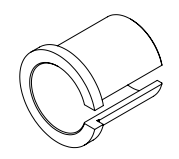
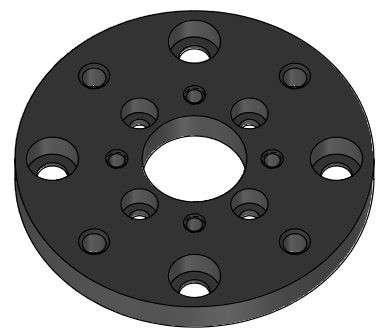
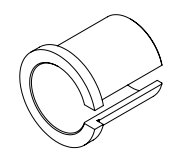
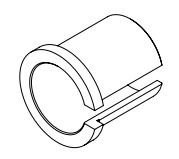


 Animation Help
.gif)
.gif)
.gif)


.gif)

.gif)
.gif)
.gif)


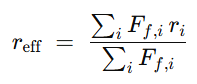


.png)
.png) [none]
[none] Made with Bullet